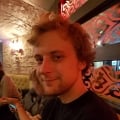
"I am a walking contradiction.
At 27, I am quite a shy person who hates crowds and who loves to be at home
listening to the radio; yet I used to be a performer. I find it difficult to
communicate with new people, but I am a radio presenter. I have struggled
mentally, on many occasions, to keep things together, but I continue to attempt
a career in the media; I have Asperger's syndrome."
When I was diagnosed with
Asperger's syndrome at 23, it changed my life. It felt like a thousand
questions had been answered at once, and things gradually became clearer. I had
suspected something in my early years considering I went to a special
educational needs school, but nothing happened. It was not until I went to
college that I had truly stood out. My interests were incredibly niche, and I
tended to look at things from a different viewpoint. This all contributed to my
lack of ability to form proper relationships with my peers, and I felt
isolated. Over time, I learnt to develop my niche interests to help pull me
through and strengthen my weaknesses.

I have presented on the radio for
nearly 10 years, broadcasting on many stations around the world via different
platforms. While still at school, I did a broadcasting course at community
radio station Tulip Radio, learning a number of interview and
presentation techniques. My conversational skills were never the best, but the
course really helped to improve my confidence and speech. From a broadcasting
point of view, it was invaluable. I got my first break as a presenter in 2008,
when I was invited to present on Boston's community station Endeavour FM. A
year later, I moved back to my birthplace of Chichester, West Sussex to study a
BA Hons in Media Production and Media Studies at the University of
Chichester. While studying, I built a basic studio in my home and
began broadcasting online. I spent the next few years honing my presentation
skills, and networking with different people; in the hope I could get a job in
the industry.
When this looked unlikely, I
started a community radio station called SouthWaves Radio; this
specialised in speech and drama programming. I decided to put together
everything that I had learned in education and voluntary experience, into the
project. During an unpaid two year stint, I worked with many organisations,
charities and businesses on the creation of content. I was riding high with the
success of this venture, my mental health started to gradually deteriorate. Due
to overwork and a lack of understanding of my influences, I had to shut down the
station and try something else. I spent several months attending sessions and
trying things that didn't work out, until I re-found myself and began working
from there. Part of it was rediscovering my love of the radio.
As a listener, I've always found
music radio somewhat intrusive. For me, it was the presenters who are the stars
of the show. I am probably the only guy who believes that Chris Moyles
doesn't talk enough! That isn't to say that I think music is a bad thing in
broadcasting; I just believe that it should be seen as a piece of the puzzle
than just the puzzle itself. When I discovered speech based radio, it was like
a whole world had opened to me. After the closure of SouthWaves Radio, I
found great comfort in listening to The Late Night Alternative With Iain
Lee on TalkRADIO. There was something about his slightly eccentric,
spontaneous but friendly manner that really spoke to me. Some of my other
'comfort listens' originate over 70+ years before that show, but have great
influence.
I am a great enthusiast of the
golden age of American radio, which is usually defined as being between the
early 30s and early 60s. Radio, in those days, tended to centre around light
entertainment, drama and comedy. I have, in particular, always appreciated
different forms of comedy. It does not always make me laugh, but rather works
as a comfort listen. My favourite is The Jack Benny Program, which is
rarely remembered today. Listening to those shows are like catching up with a
friend; the conversation is light, the gags are audio visual and the running
jokes feel familiar yet fresh.
In recent times, I was confused
about my future but have started to see things clearer. In this day of social
media, I believe that anything is possible; if you have faith in it. Although I
have often had doubt in it, I would love to broadcast professionally, or at
least be involved in some way. I understand that many of the things I love
about radio, simply do not exist any more; or in least the way that it used to.
That is normally the part that I struggle with, as I often feel like a man out
of his time. My greatest challenge, yet my greatest strength, is to combine
everything that I love; creating something new and uniquely me
If I fail in my attempt to become
a broadcaster I would love to be a professional stage compère or radio
comedian; along the lines of Bruce Forsyth or Jack Benny.
I am currently presenting two
syndicated programs (New Music Hour and The Pop Show) and two podcasts (The
Jamie Dyer Show and Autisii Chat). Find out more here.
I managed to turn some of my weaknesses into strengths through the aid
of my niche interests. How have your niche interests helped you?