Article from Disability News Service

![McFadden brags about cutting disability benefits, just as his own strategy warns of 'deep material poverty' The work and pensions secretary has bragged about cutting disabled people's support, three days after launching a child poverty strategy which warned that more than a million children in families where someone was disabled were living in "deep material poverty". Pat McFadden told the BBC's Laura Kuenssberg on Sunday that his government had halved the health element for new claimants of universal credit because "under the Tory system we inherited, people got double the money for declaring themselves unfit for work". And he said he did not rule out further cuts to benefits. But his comments on Sunday morning came three days after his Department for Work and Pensions (DWP), alongside the Department for Education and the prime minister, had launched Labour's new Child Poverty Strategy. The strategy's evidence pack states that "single parent families and families where someone has a disability (are) particularly overrepresented in deep material poverty". In 2023-24, according to the strategy, there were 1.3 million children in a family where someone is disabled (22 per cent of those children) who were in "deep material poverty". The evidence pack points to disabled people's "high additional living expenses such as transport, home adaptations, or specialist equipment", while "caring responsibilities or accessibility issues can mean that it is difficult or not possible to find work that suits [those families'] requirements". The report itself says that "deep material poverty is especially pronounced for children in single parent families and children in families with disability". And it adds: "There are parents who may not be able to work, for example due to severe disability, or who fall on difficult times. " "It is not right that we have a system where children are penalised through no fault of their own." Three days later, McFadden boasted to Kuenssberg about doing exactly that by slashing the health element of universal credit for most new claimants by about £50 a week from next April. Announcing the Child Poverty Strategy, the government said it would lift about 550,000 children out of poverty by 2030 and tackle the "root causes of poverty by cutting the cost of essentials, boosting family incomes, and improving local services". Measures include making it easier for new parents who receive universal credit to return to work by extending eligibility for upfront childcare costs to those returning from parental leave; ending the unlawful placement of families in bed and breakfasts beyond the six-week limit; introducing a new legal duty for councils to notify schools, health visitors, and GPs when a child is placed in temporary accommodation; and taking measures to help families buy more The government had already announced at last month's budget that it was removing the universal credit two-child limit that was imposed by the last government in 2017. Asked by Disability News Service (DNS) to respond to McFadden's comments, and to say whether he would apologise for his misleading statement about claimants "declaring themselves unfit for work" - when there is a lengthy and harsh "fitness for work" assessment process - a government spokesperson said: "We are reforming the broken system we inherited by tackling perverse incentives around sickness claims, increasing face-to-face assessments, and investing £1 billion to help sick and disabled people into good, secure jobs. "We want a welfare state that supports those who need it while helping people into work and delivering fairness to the taxpayer. "That's why we've launched the Timms Review to make PIP fair and fit for the future, while Alan Milburn's investigation into young people and inactivity will help us tackle the key barriers behind youth unemployment. "Thanks to our decision to scrap the two- child limit and introduce a wider package of measures for families we will lift 550,000 children out of poverty by the end of this parliament." This week, McFadden also released a written statement updating MPs on his department's plans to improve its record on safeguarding benefit claimants. It details a series of actions taken since a report on "safeguarding vulnerable claimants" was published by the Commons work and pensions committee in May. Much of the statement had already been included in a letter he wrote to the committee on 18 November, on which he was questioned by the committee the following day. McFadden admitted in this week's statement that an assessment of DWP's safeguarding approach had found "some good practice, but also variation in awareness, skills, and accountability". He said the first vear of a new five-vear [text missing from screenshot] DWP strategy would focus on "raising staff awareness of safeguarding responsibilities, building capability through training, and strengthening relationships with local authorities, health services, and voluntary organisations". He will publish a DWP safeguarding policy framework next year, setting out the department's "comprehensive approach". McFadden said DWP "remains open to adopting a statutory duty" to safeguard claimants, one of the key recommendations in the committee's report. But there was no mention in his statement of the committee's call for a new independent body to investigate cases where claimants have been seriously harmed by DWP's actions. DNS has previously shown how senior civil servants and ministers spent more than a decade covering up evidence that linked DWP's actions with hundreds, and probably thousands, of deaths of disabled people who relied on the social security system *. Documents secured through freedom of information requests, inquest reports, and investigations by bereaved family members show how DWP destroyed incriminating records, failed to share crucial evidence with its own independent reviewers and grieving relatives, and even lied to a coroner. *The Department: How a Violent Government Bureaucracy Killed Hundreds and Hid the Evidence, DNS editor John Pring's book on the years of deaths linked to DWP's actions and failings, is published by Pluto Press 11 December 2025](https://us.v-cdn.net/6027153/uploads/OAYEKQGDKYBS/screenshot-20251211-131921-outlook.jpg)
Comments
-
@Catherine21 it's on their website now:-
Dated - 11th December 2025
The work and pensions secretary has bragged about cutting disabled people’s support, three days after launching a child poverty strategy which warned that more than a million children in families where someone was disabled were living in “deep material poverty”.
Pat McFadden (pictured) told the BBC’s Laura Kuenssberg on Sunday that his government had halved the health element for new claimants of universal credit because “under the Tory system we inherited, people got double the money for declaring themselves unfit for work”.
And he said he did not rule out further cuts to benefits.
But his comments on Sunday morning came three days after his Department for Work and Pensions (DWP), alongside the Department for Education and the prime minister, had launched Labour’s new Child Poverty Strategy.
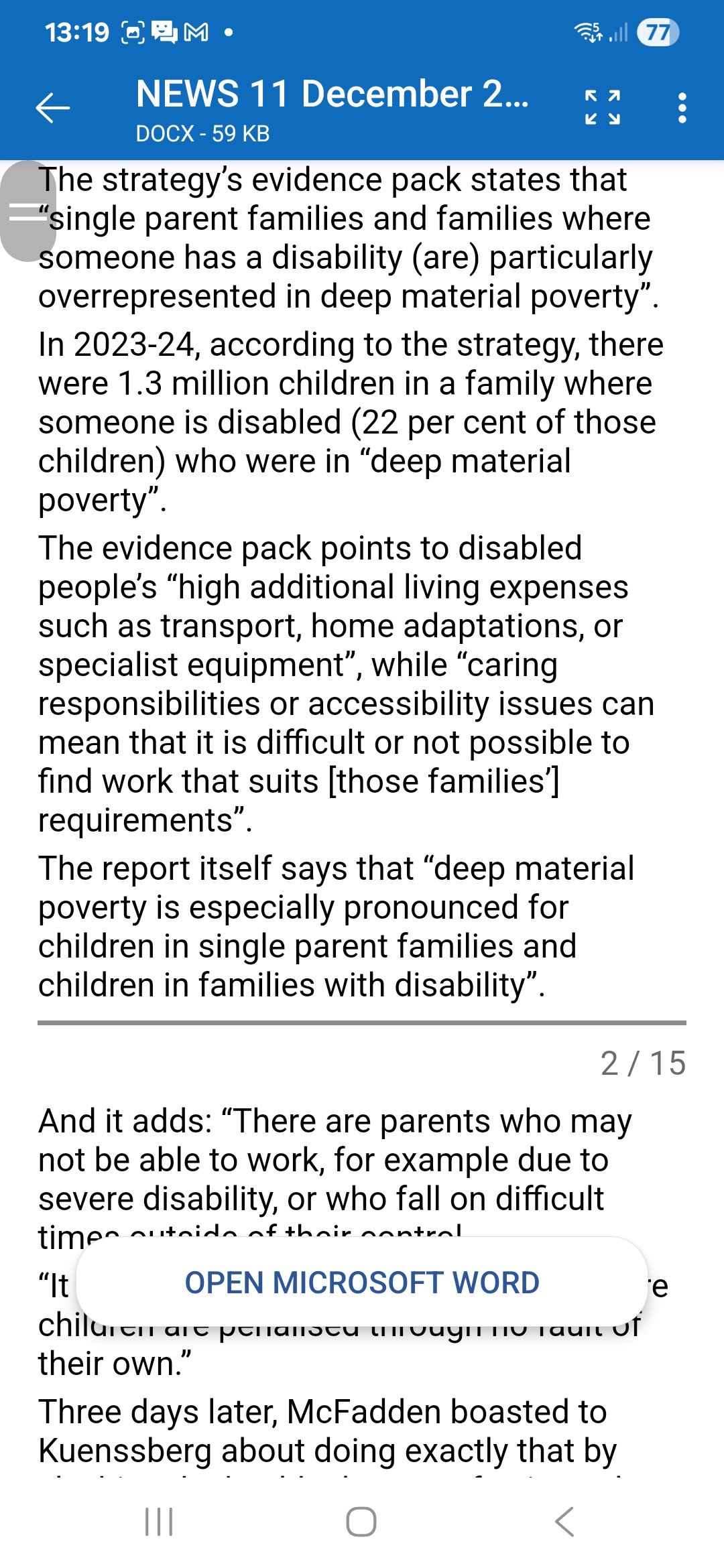
The strategy’s evidence pack states that “single parent families and families where someone has a disability (are) particularly overrepresented in deep material poverty”.
In 2023-24, according to the strategy, there were 1.3 million children in a family where someone is disabled (22 per cent of those children) who were in “deep material poverty”.
The evidence pack points to disabled people’s “high additional living expenses such as transport, home adaptations, or specialist equipment”, while “caring responsibilities or accessibility issues can mean that it is difficult or not possible to find work that suits [those families’] requirements”.
The report itself says that “deep material poverty is especially pronounced for children in single parent families and children in families with disability”.
And it adds: “There are parents who may not be able to work, for example due to severe disability, or who fall on difficult times outside of their control.
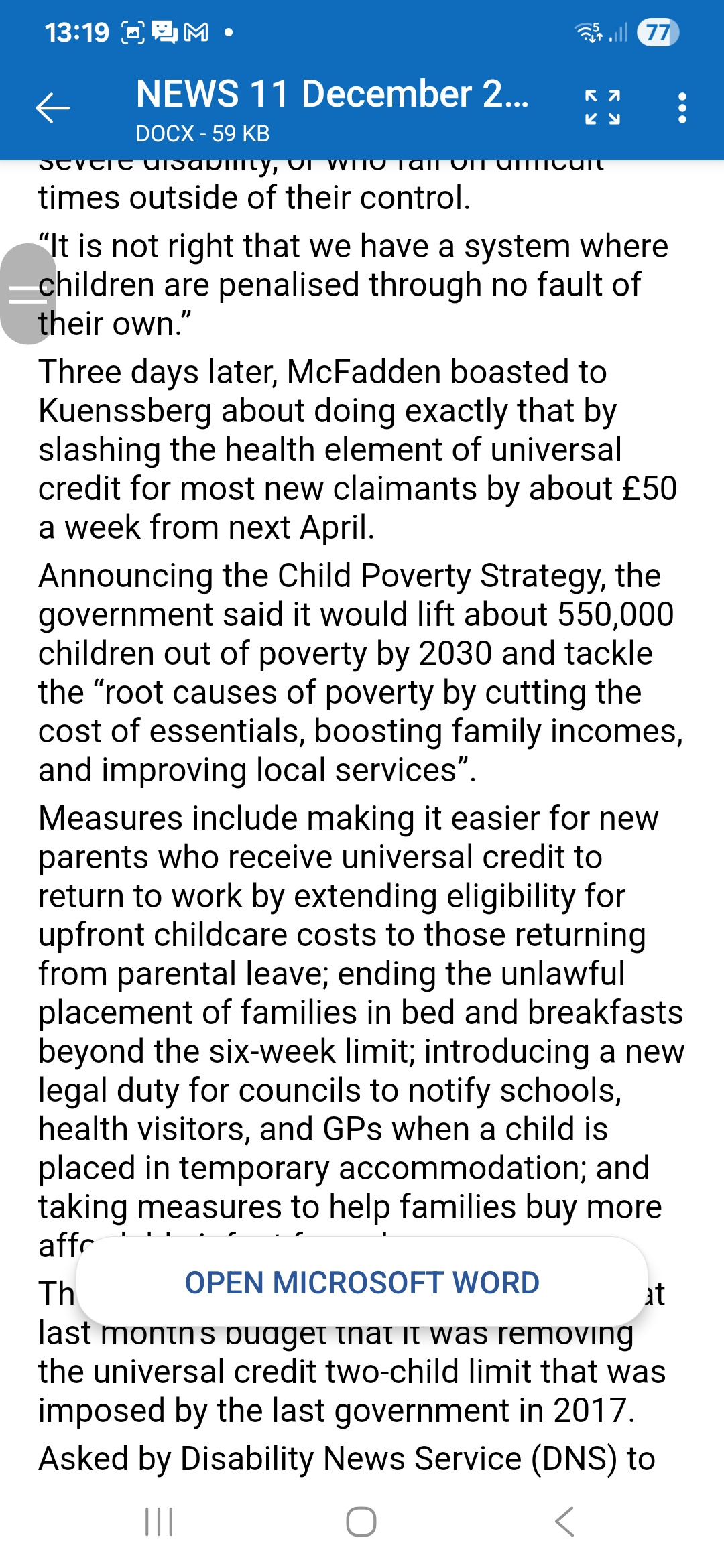
“It is not right that we have a system where children are penalised through no fault of their own.”
Three days later, McFadden boasted to Kuenssberg about doing exactly that by slashing the health element of universal credit for most new claimants by about £50 a week from next April.
Announcing the Child Poverty Strategy, the government said it would lift about 550,000 children out of poverty by 2030 and tackle the “root causes of poverty by cutting the cost of essentials, boosting family incomes, and improving local services”.
Measures include making it easier for new parents who receive universal credit to return to work by extending eligibility for upfront childcare costs to those returning from parental leave; ending the unlawful placement of families in bed and breakfasts beyond the six-week limit; introducing a new legal duty for councils to notify schools, health visitors, and GPs when a child is placed in temporary accommodation; and taking measures to help families buy more affordable infant formula.
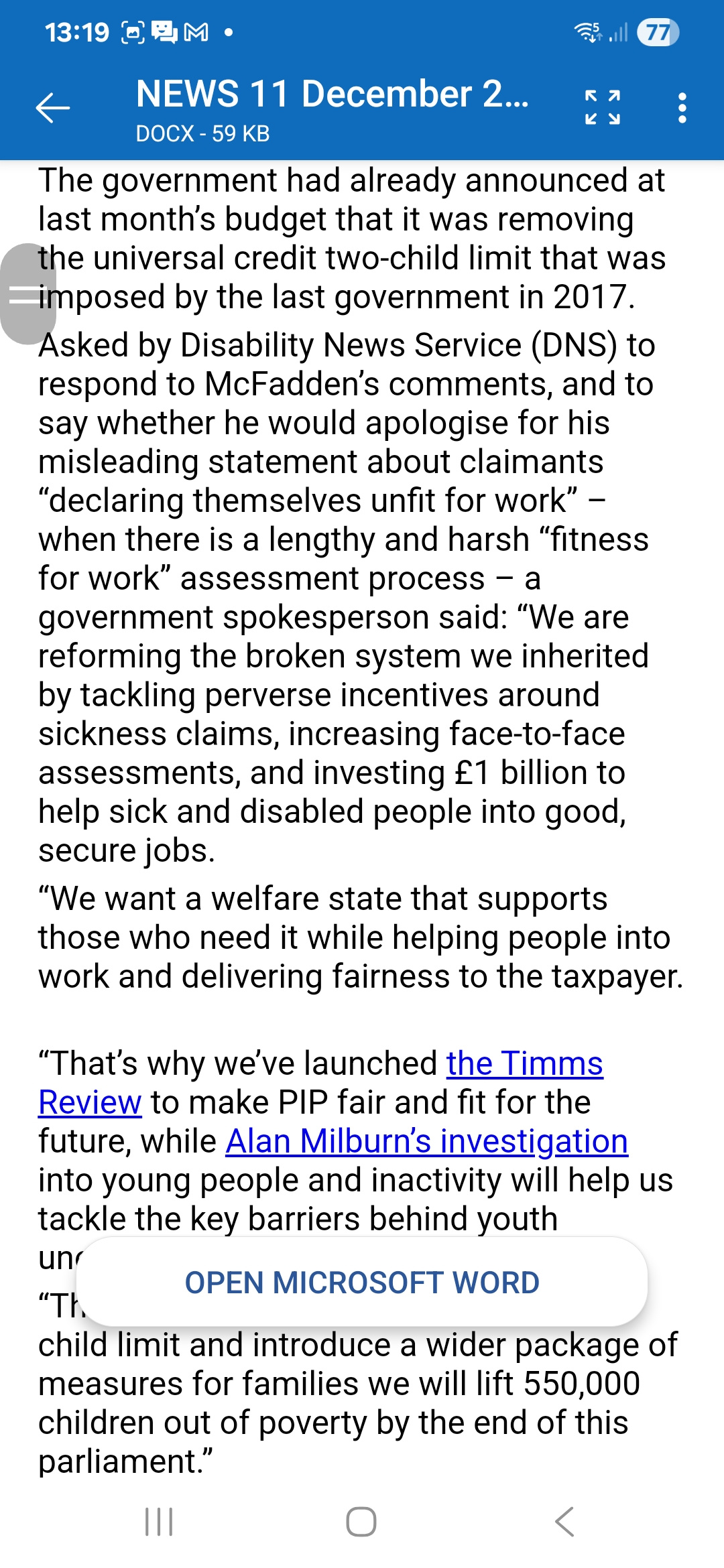
The government had already announced at last month’s budget that it was removing the universal credit two-child limit that was imposed by the last government in 2017.
Asked by Disability News Service (DNS) to respond to McFadden’s comments, and to say whether he would apologise for his misleading statement about claimants “declaring themselves unfit for work” – when there is a lengthy and harsh “fitness for work” assessment process – a government spokesperson said: “We are reforming the broken system we inherited by tackling perverse incentives around sickness claims, increasing face-to-face assessments, and investing £1 billion to help sick and disabled people into good, secure jobs.
“We want a welfare state that supports those who need it while helping people into work and delivering fairness to the taxpayer.
“That’s why we’ve launched the Timms Review to make PIP fair and fit for the future, while Alan Milburn’s investigation into young people and inactivity will help us tackle the key barriers behind youth unemployment.
“Thanks to our decision to scrap the two-child limit and introduce a wider package of measures for families we will lift 550,000 children out of poverty by the end of this parliament.”
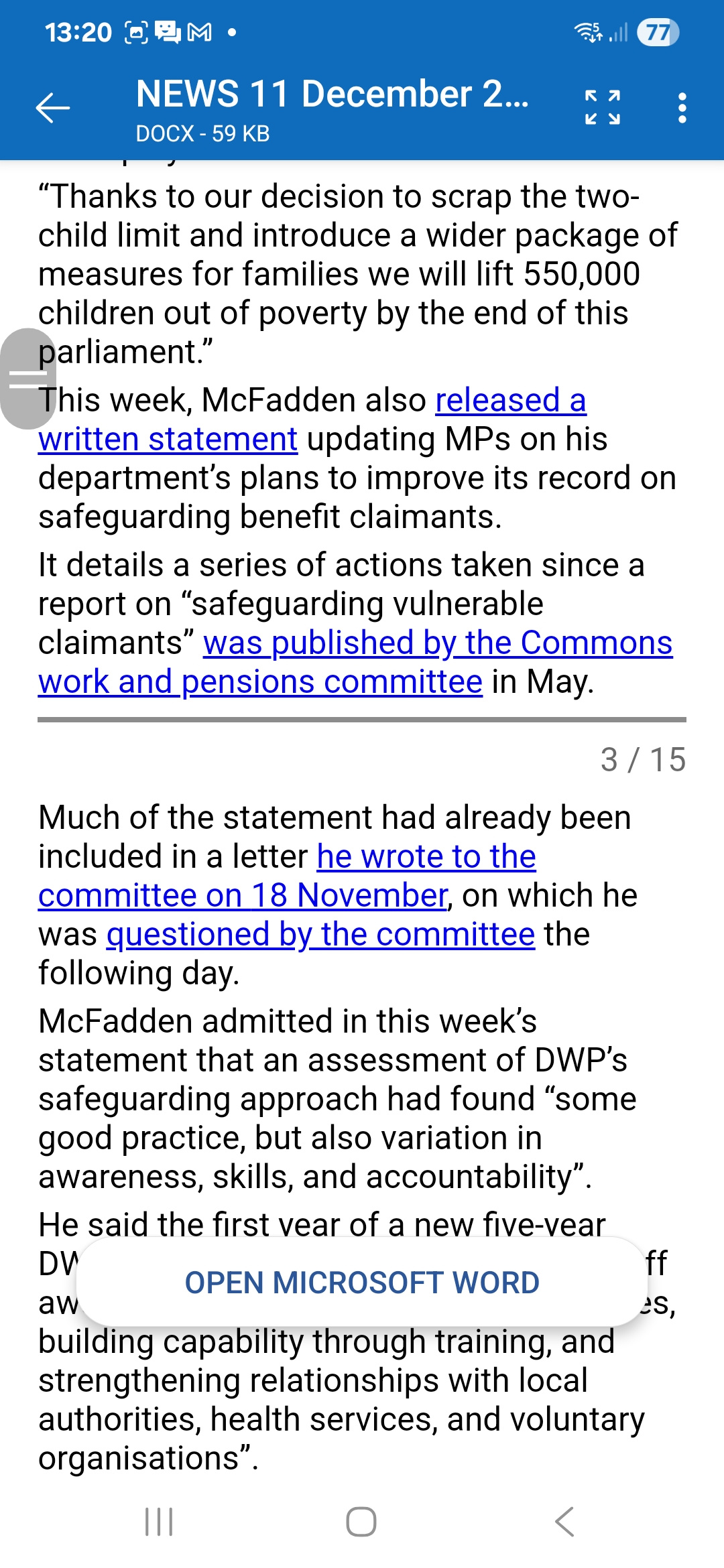
This week, McFadden also released a written statement updating MPs on his department’s plans to improve its record on safeguarding benefit claimants.
It details a series of actions taken since a report on “safeguarding vulnerable claimants” was published by the Commons work and pensions committee in May.
Much of the statement had already been included in a letter he wrote to the committee on 18 November, on which he was questioned by the committee the following day.
McFadden admitted in this week’s statement that an assessment of DWP’s safeguarding approach had found “some good practice, but also variation in awareness, skills, and accountability”.
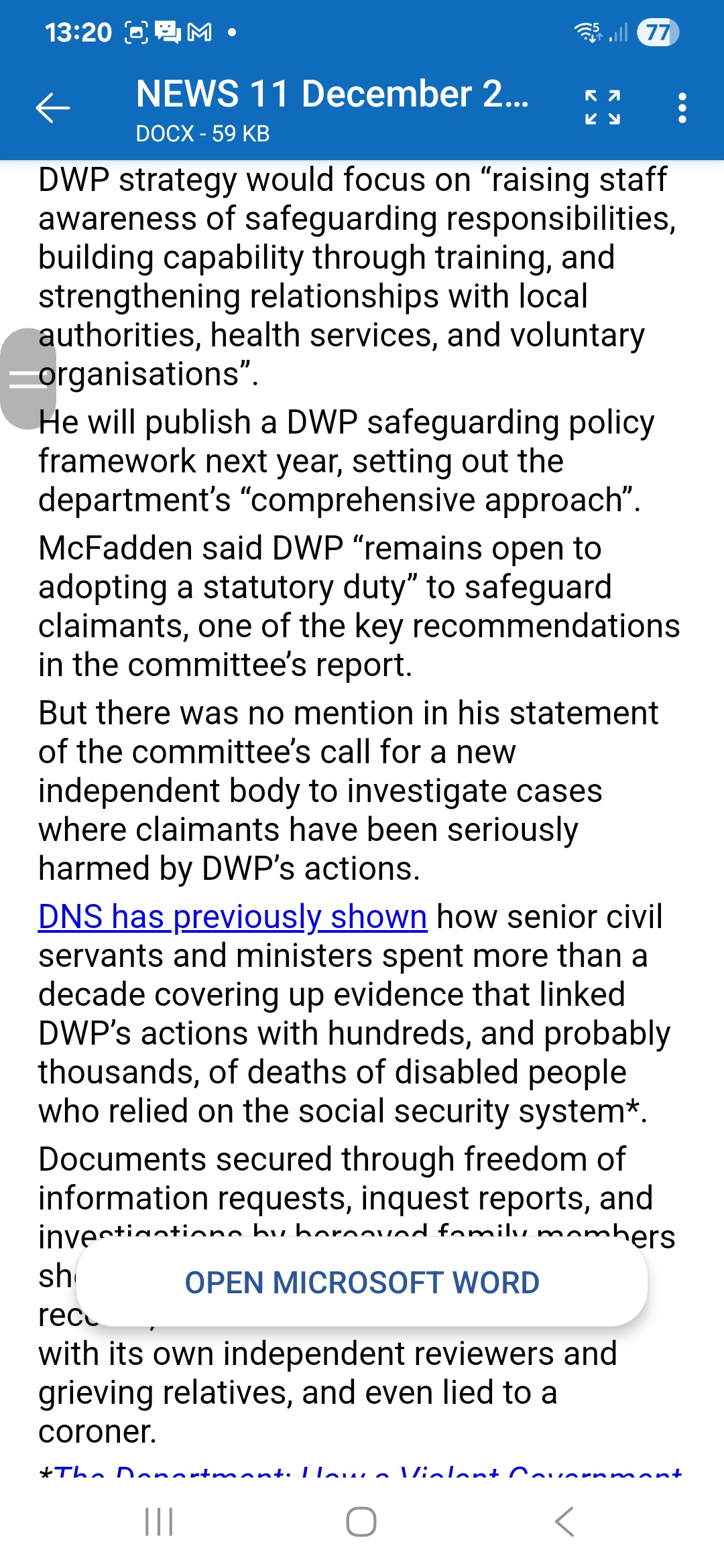
He said the first year of a new five-year DWP strategy would focus on “raising staff awareness of safeguarding responsibilities, building capability through training, and strengthening relationships with local authorities, health services, and voluntary organisations”.
He will publish a DWP safeguarding policy framework next year, setting out the department’s “comprehensive approach”.
McFadden said DWP “remains open to adopting a statutory duty” to safeguard claimants, one of the key recommendations in the committee’s report.
But there was no mention in his statement of the committee’s call for a new independent body to investigate cases where claimants have been seriously harmed by DWP’s actions.
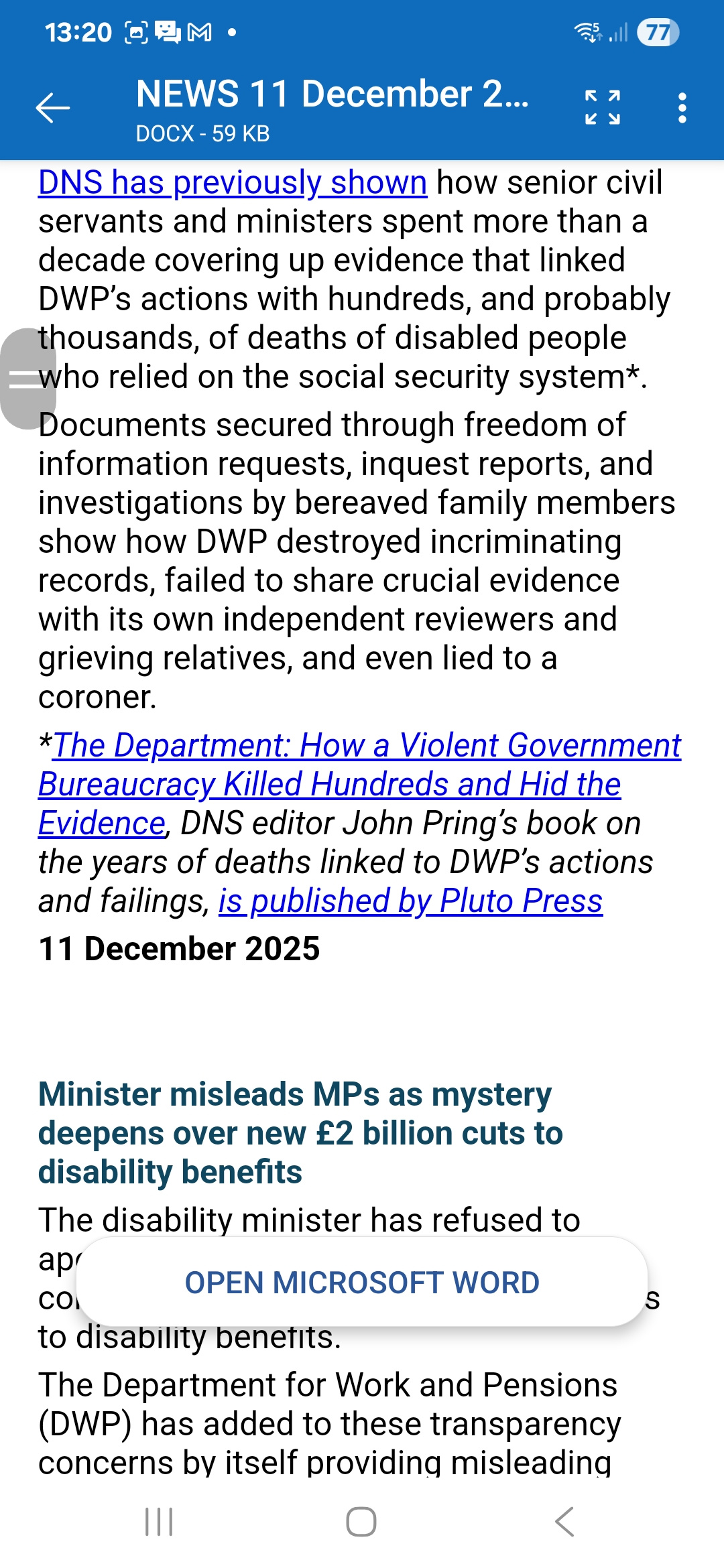
DNS has previously shown how senior civil servants and ministers spent more than a decade covering up evidence that linked DWP’s actions with hundreds, and probably thousands, of deaths of disabled people who relied on the social security system*.
Documents secured through freedom of information requests, inquest reports, and investigations by bereaved family members show how DWP destroyed incriminating records, failed to share crucial evidence with its own independent reviewers and grieving relatives, and even lied to a coroner.
1 -
I just hope that the May elections cause the highly predicted leadership challenge and cabinet reshuffle because this "man" and I use that term in place of what I'd like to call him, needs to be moved, he clearly enjoys his job a little too much as he's never far from sharing his views somewhere. like a jack in a box keeps popping up.
2 -
I think we have to prepare for a battle tbh everything labour is doing is pretty damaging and its a worldwide thing
2 -
Mw they are deplorable everyday something more sinister comes out i knew when they mentioned lifting child benefit cap we would be hit im concerned as im emailing mps and not even receiving acknowledgement ive emailed about ten mps ?? Strange I even phoned mine and asked why im not recieved case number she looked me up and said oh yes we can see them we are letting them build up ?? We will have a fight but I feel they gained thier strenght and are ploughing through without a care they are truly shocking dont hear anything from Richard cant remember his surname he was always advocating for disabled same with john mcdonnell silence or maybe ive missed them
1 -
I agree. I was shocked at the last two paragraphs, I gather that would be the David Cameron years. It was disability he targeted from memory.
1 -
an MP will ALWAYS prioritise their seat and self over the party no matter what bribes have been given such as lifting that cap, enough angry emails they'll panic and play up again come a big vote, unanswered or not they'll read them.
2 -
I dont know if ive been blocked when they was doing all that pip changes i emailed baronessrs Lords mps loads over and over can they block people its weird
0 -
I dont think from my opinion have we ever had a government like this look at the 8th young people 2 in hospital on hunger strike no news coverage Larry fink bought tiktok not that I go on it but young people do glad people understand thier foingvthis but I afraid with the addiction people habe on mobile phones they will go on digital ID but all we can do if fight it refuse it
1


Categories
- All Categories
- 16K Start here and say hello!
- 7.6K Coffee lounge
- 111 Games den
- 1.8K People power
- 171 Announcements and information
- 25.5K Talk about life
- 6.2K Everyday life
- 507 Current affairs
- 2.5K Families and carers
- 880 Education and skills
- 2K Work
- 589 Money and bills
- 3.7K Housing and independent living
- 1.2K Transport and travel
- 648 Relationships
- 1.6K Mental health and wellbeing
- 2.5K Talk about your impairment
- 883 Rare, invisible, & undiagnosed conditions
- 942 Neurological impairments and pain
- 2.2K Cerebral Palsy Network
- 1.3K Autism and neurodiversity
- 41.1K Talk about your benefits
- 6.2K Employment & Support Allowance (ESA)
- 20.4K PIP, DLA, ADP & AA
- 9.2K Universal Credit (UC)
- 5.3K Benefits and income