Startle Reflex and Cerebral Palsy (CP)

As we approach Cerebral Palsy Month, I thought I would spotlight a question that I get asked in my role as cerebral palsy Programme lead for Scope. The question about the startle reflex is a really good (and very common) question. Outside of the cerebral palsy world, it’s one that often gets under-recognised outside of very specialist circles.
I have spent a few weeks pulling together some information about this aspect of our disability. I hope it helps in some way :)
What is the Moro (startle) reflex?
The Moro reflex is a primitive reflex present in babies from birth. It’s the classic startle response: arms fling out, hands open, then come back in. In non-disabled infants, it usually integrates (switches off) by 4–6 months as higher brain control develops.
In people living with cerebral palsy, the reflex may be:
- Retained
- Exaggerated
- Triggered far more easily
- Never fully integrated
This isn’t a behavioural issue — it’s neurological.
How it shows up in people with cerebral palsy
In children and adults with CP, a retained Moro/startle reflex can look like:
- Sudden full-body stiffening or flinging of arms
- Heightened reaction to:
- Loud noises
- Unexpected touch
- Visual movement
- Loss of balance
- Increased spasticity or dystonia immediately after the startle
- Difficulty with:
- Postural control
- Fine motor tasks
- Transfers or walking
- Rapid fatigue (because the nervous system is always “on edge”)
- Anxiety-like symptoms that are neurologically driven, not psychological
Many adults with CP describe feeling as though their body is permanently in fight-or-flight mode.
Why does this happen in cerebral palsy?
Cerebral palsy involves injury or disruption to parts of the brain responsible for motor control, sensory integration, and inhibition.
Because of this:
- The brain struggles to inhibit primitive reflexes
- The nervous system remains hyper-reactive
- Sensory input (sound, touch, movement) can be misinterpreted as a threat
- Higher-level motor planning has to work around the reflex
This is especially common in:
- Spastic CP
- Dyskinetic CP
- People with significant sensory processing differences
Are there any solutions?
There isn’t a single “fix”, but there are ways to reduce impact and frequency.
1. Reflex integration & neurodevelopmental therapy
Some physiotherapists and occupational therapists use:
- Targeted movement patterns
- Slow, rhythmic input
- Vestibular and proprioceptive work
Evidence is mixed, but many people report functional improvements, especially when therapy is consistent and tailored.
2. Proprioceptive & deep pressure strategies (Learned movement control)
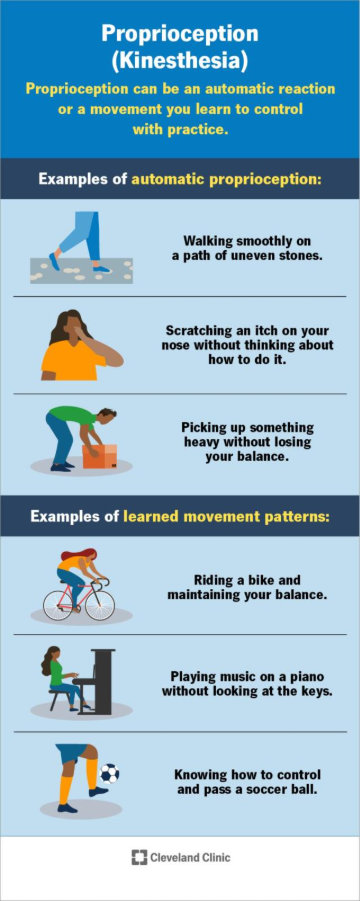
Deep pressure helps calm the nervous system:
- Weighted blankets or lap pads
- Compression garments
- Firm, predictable handling during transfers
- Resistance-based exercises
These don’t remove the reflex — but they can lower baseline arousal, making startle less frequent.
3. Environmental adaptations
Small changes can make a big difference:
- Reducing sudden noise where possible
- Giving verbal warning before touch or movement
- Consistent routines
- Predictable lighting and visual environments
This is particularly important in workplaces, schools, and clinical settings.
4. Medication (for some people)
In certain cases, clinicians may consider:
- Medications that reduce spasticity
- Medications that dampen excessive neurological excitability
This is very individual and usually aimed at the overall tone, not the reflex alone.
5. Postural stability & core control
Improving stability can reduce startle triggers:
- Supportive seating
- Better foot and trunk alignment
- Assistive technology that reduces effort and surprise
When the body feels safer, the reflex fires less often.
A really important point
For adults with CP, especially, the Moro/startle reflex is often mislabelled as:
- Anxiety
- Over-reaction
- Behavioural response
In reality, it’s a hard-wired neurological reflex interacting with a lifelong condition.
Recognising that changes the conversation — from “why are you reacting like that?” to “how do we make this environment work better for your nervous system?”
Bottom line
- The Moro/startle reflex can persist in cerebral palsy
- It’s neurological, not psychological
- It can significantly affect daily life, fatigue, and safety
- There’s no cure — but there are practical ways to reduce its impact
- Understanding it properly is often the most powerful intervention of all
Comments
-
They told me i have Giles de tourettes
0 -
I feel like I'm always made to feel shamed for my startle reflex. If i'i'm out and about and there's a lloud noise, it makes me jump and people make comments and laugh at me.
My mam used to shout at me when it happened as well.
It's a part of me. It's a part of having CP and i shouldn't be made to feel ashamed for it.
1 -
People can be very insensitive to things that they don't understand—even people who are close to us.
You should not be ashamed, and I'm glad to see that you have reached the point where you are not.
0

Categories
- All Categories
- 16.2K Start here and say hello!
- 7.6K Coffee lounge
- 117 Games den
- 1.8K People power
- 171 Announcements and information
- 25.5K Talk about life
- 6.1K Everyday life
- 404 Current affairs
- 2.5K Families and carers
- 883 Education and skills
- 2K Work
- 601 Money and bills
- 3.8K Housing and independent living
- 1.2K Transport and travel
- 670 Relationships
- 1.6K Mental health and wellbeing
- 2.6K Talk about your impairment
- 883 Rare, invisible, & undiagnosed conditions
- 943 Neurological impairments and pain
- 2.3K Cerebral Palsy Network
- 1.3K Autism and neurodiversity
- 41.3K Talk about your benefits
- 6.2K Employment & Support Allowance (ESA)
- 20.5K PIP, DLA, ADP & AA
- 9.3K Universal Credit (UC)
- 5.4K Benefits and income