Rent arrears and court order.

Just to clarify, both of them are fully aware of what is written here and have given their consent for me to post this.
I’m also not suggesting that they shouldn’t pay anything towards the arrears. They do owe the money and I completely understand that it needs to be repaid. I’m simply trying to find out whether there is a way of putting a realistic and affordable repayment plan in place for them. I’m hoping someone may be able to offer some advice or point me in the right direction, as I’m not familiar with this sort of situation.
My brother and his partner both have significant difficulties with certain aspects of day-to-day life, in particular, administration. My brother has moderate learning difficulties and Mosaic Down syndrome. He uses his fingers to do basic maths and is much better with practical tasks than paperwork or anything involving numbers and written information. His partner has severe anxiety, autism (she was diagnosed at 9 in the early 2000s), ADHD and significant mental health difficulties. They both attended a specialist school, where they met. 😁
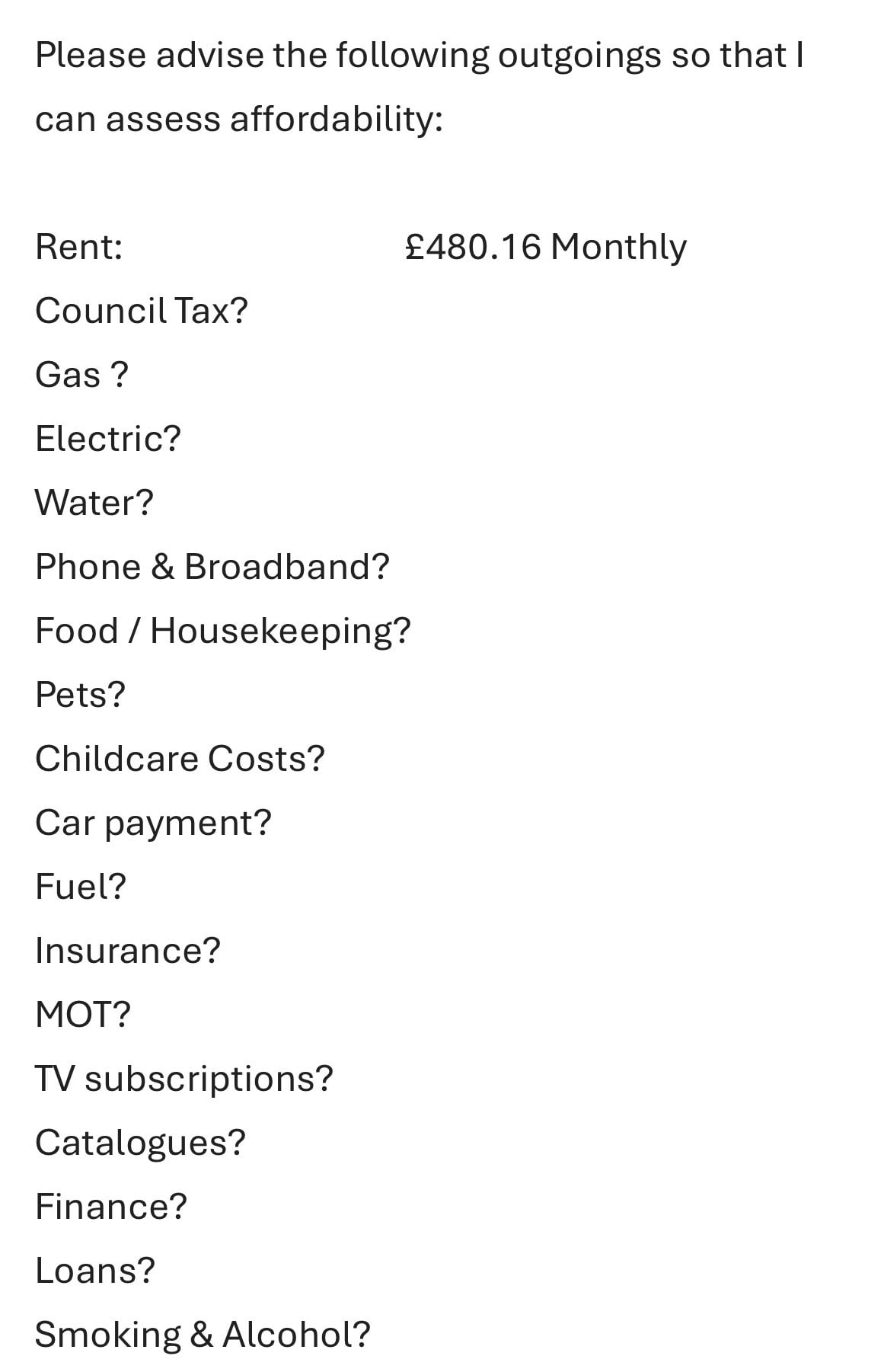
I’ve only just discovered that they have fallen into rent arrears and now have a suspended court order. An income officer has been involved and completed an income and expenditure form with them. The income section appears to have been completed, but despite it being made clear that they struggle significantly with working out and recording their expenditure, I can’t find an expenditure section that has been completed properly apart from the rent.
I’m unsure whether they need legal advice and whether there is any possibility of having the court order varied so that the monthly repayment is more affordable. At the moment, they have to pay £553.30 to cover the rent and arrears. My brother’s partner attended most of the meetings, although she has difficulties, she has a better understanding of these things than my brother even though it is still quite limited. She has informed me that she didn’t really understand what a lot of it meant. At one point, I can she expressed concerns in email that she thought the situation could result in them being arrested. The income officer did explain that they weren’t going to be arrested but the emails sent to them were extremely long and in my opinion, didn’t sufficiently take into account their difficulties with reading and understanding written information. The income officer was aware of these difficulties. There is acknowledgement of this in the correspondence, including after some emails that were sent she expressed couldn’t understand the emails and had asked for clarification.
I’m also concerned that rather than supporting or encouraging them to attend court, the income officer apparently told them that if they didn’t need to attend if they felt they couldn’t because of anxiety or similar difficulties and there was no need for them to attend because a payment plan had already been agreed and they was seeking a suspended possession order.
Should

they have been encouraged to obtain independent legal advice before agreeing to the payment plan? I would also have thought that, given their difficulties there may have been other options available, such as attending remotely or having another appropriate alternative put in place rather than simply not attending court.
I will attach the budget sheet that the income officer completed. It shows their income and only one expenditure, which is rent. She has also included Motability as income but that money actually goes towards their car lease so they don’t receive it as money available to spend in their bank account.
I would really like to understand:
Should income such as PIP and Carer’s Allowance have been included in their income assessment?
Should the Motability amount have been treated as available income when it is used towards the car lease?
Should their full expenditure have been properly worked through with them, particularly when they had already explained that they struggle with this?
Should my brother and his partner have been offered additional support because of their disabilities and difficulties with reading, processing and understanding financial or legal information?
Should reasonable adjustments have been considered in the way information was communicated to them?
Should they have been encouraged to obtain independent legal advice before agreeing to the repayment arrangement?
Was it appropriate for them to be told they did not need to attend court because a payment plan had been agreed?
Could they have been offered a remote hearing or another alternative because of their anxiety and other difficulties?
Is there any way of having the suspended court order or repayment arrangement reviewed and potentially reducing the monthly arrears payment to an amount they can realistically afford?
I would be extremely grateful if anyone could advise me on the best way I can help them and whether there is actually anything I can do to help reduce the monthly arrears payments. I’ll be doing as much research as I can in my spare time over the weekend.
Unfortunately, the practical support I can offer is extremely limited as I live over three hours away from them, and I was only made aware of the situation today.
I just want to make sure that they have properly understood what has happened that their circumstances and disabilities have been properly taken into consideration and that the repayment amount is something they can realistically and sustainably afford.
If anyone has experience with rent arrears, suspended court orders, housing law, disability support, reasonable adjustments or similar situations, I would be extremely grateful for any advice, particularly regarding what we should do next or which organisations we should contact or even online suggestions that could aid me which researching.
Thank you in advance to anyone who takes the time to read this and offer advice. ❤️
Answers
-
Hi @DebDeb. I am sorry your brother and his partner are going through this. We have some information about rent arrears which you can find here . It also includes information on asking for reasonable adjustments.
Do you think they would maybe benefit from an advocate? An advocate could be a family member such as yourself, or an independent. Here is some more information .
Our members may be able to add their own experiences with this.
1 -
Thank you for your reply @Rachel_Scope really appreciated.
I’ve started to look into becoming an appointee, but I’m unsure whether this may just become another barrier, as it seems the appointee/advocate would need to attend appointments and be available during the week. I do need to look into this properly, as my knowledge is extremely limited having never dealt with anything like this in the past.
With there being over a three-hour distance between us, myself working full-time, and also having four children who all attend sports clubs, the only time I can realistically provide support is at weekends. This is proving to be an issue, as much as I want to provide them with all the support they need, I know that in reality it simply won’t be doable for me to be available during the week.
I’m going to do some research on the internet this afternoon to see what I can find out about what support can be put in place. Her partner doesn’t have any family to rely on either, as her mother has passed away and her dad sadly passed away when she was four.0 -
I think it's a great idea to look into it further. If you are unable to become their advocate, they can get one from an independent organisation. It sounds like you have a busy life so don't feel pressured into doing it.
0 -
@Rachel_Scope Thank you so much ☺️ it’s so hard. As his sister I want to be there and support in every way that is needed. I do need to remain realistic as I don’t want to become another barrier to them getting the support needed, I’m upset and angry as even when trying their hardest to navigate the systems and asking for help they seemed to have been either ignored or passed to another service. So much has happened I wasn’t aware of, I feel I have let them down by not picking up on things. The distance is a huge factor and they aren’t not wanting to move near myself which I can’t blame as where they live is all they have known. Obviously they have rent arrears which went court, they also have council tax arrears which has been court, they even approached both the council and income officer asking how to pay the council tax as they have never done it previously due to been fully exempt due to both failing into the SMI category, yet they was never given the answer needed to avoid the arrest. Their new universal claim also got closed again they asked on their journal for support and several times stated they didn’t know what to do and this was ignored. Sorry i don’t mean to go on think I’m just overwhelmed as I never realised just how much they have been struggling and failing to get appropriate support.
0 -
I completely understand that. They are going through so much and it must be hard for you to be so far away. There are people that can help them though.
As it is quite complicated, I would recommend you also get some advice from a trained benefits adviser. You can find one here . It might be useful to get some legal advice too .
0 -
Should their full expenditure have been properly worked through with them, particularly when they had already explained that they struggle with this?
Should my brother and his partner have been offered additional support because of their disabilities and difficulties with reading, processing and understanding financial or legal information?
Should reasonable adjustments have been considered in the way information was communicated to them?
Yes to all the above. Is this HA property? If so, a welfare officer should have been involved. Tenant welfare is not the priority for a rental income officer.
Yes, you can apply to vary the court order. Consult Shelter for housing law and advice.
0 -
I'm not aware of any general rule that says a housing association must involve a welfare officer in these circumstances. The government guidance refers instead to housing/rent officers helping tenants understand the situation, discuss their financial circumstances and work towards an affordable repayment arrangement.
I also don't think saying 'tenant welfare is not the priority for a rental income officer' accurately reflects the legal position. The landlord still has to consider disability-related needs and take reasonable steps to ensure the tenant understands the information being given to them.
And while it is possible to apply to vary some court orders, that depends on the type of order and the circumstances, it isn't simply an automatic right to have any order changed.
The statement that a welfare officer should have been involved is too categorical.
0



Categories
- All Categories
- 16.4K Start here and say hello!
- 7.7K Coffee lounge
- 122 Games den
- 1.8K People power
- 190 Announcements and information
- 25.8K Talk about life
- 6.2K Everyday life
- 437 Current affairs
- 2.5K Families and carers
- 888 Education and skills
- 2K Work
- 631 Money and bills
- 3.8K Housing and independent living
- 1.2K Transport and travel
- 673 Relationships
- 1.6K Mental health and wellbeing
- 2.6K Talk about your impairment
- 885 Rare, invisible, & undiagnosed conditions
- 949 Neurological impairments and pain
- 2.3K Cerebral Palsy Network
- 1.3K Autism and neurodiversity
- 41.7K Talk about your benefits
- 6.2K Employment & Support Allowance (ESA)
- 20.6K PIP, DLA, ADP & AA
- 9.5K Universal Credit (UC)
- 5.4K Benefits and income