Once upon a time, back in 1983, there was a
seven year old girl watching Blue Peter when her heart skipped a beat with joy.
She screamed for her mother, who came quickly. There was big news to tell.
“There’s someone like ME on the TV!” screamed the girl leaping
from her seat and pointing at the presenter on screen. “She’s got a hearing aid
like ME!!!”
In that moment the girl had seen herself represented in the
cultural mainstream for the first time. After a quick inspection, the mother
gently explained that it was not a hearing aid, but a talk-back ear piece so
the presenter could hear the director talking to her from the gallery. It
looked like a hearing aid but the presenter wasn’t deaf. The girl’s heart sank.
That girl was me.

In 2015, after realising my own children’s toys still bore no
representations of disability, I founded #ToyLikeMe, a creative collective of
artists celebrating disability in toys and calling the global toy industry to positively represent 150 million
disabled children worldwide.
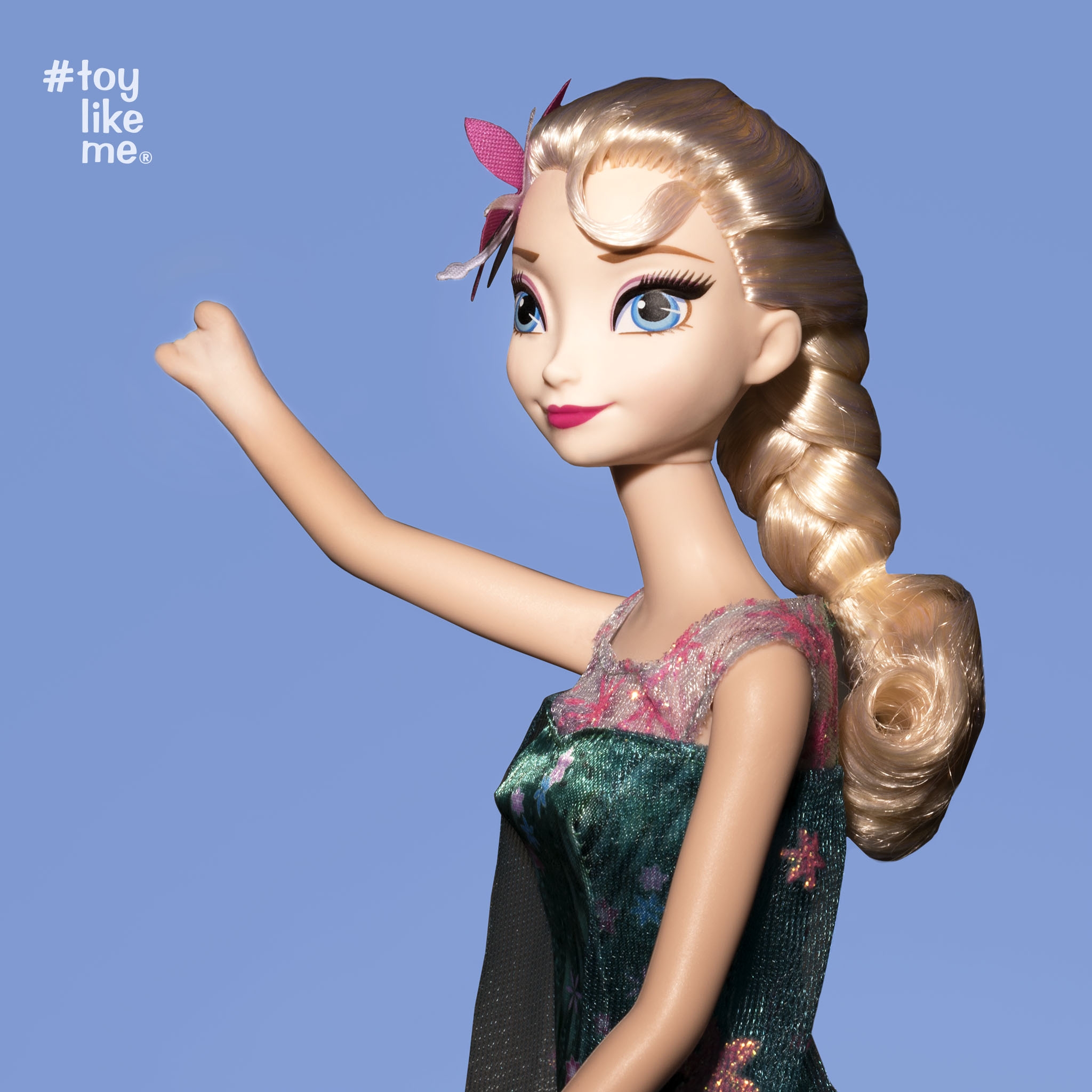
Our current project sees the launch of Toy Box Tales is an online exhibition of 12 stunning photographic images of mainstream toys customised to give them diff:abilities.

150 million diff:abled children worldwide are culturally marginalised by the very industries which exist to entertain and educate them. They are almost invisible across children’s industries. But this Christmas, the sparkle-filled winds of change are sweeping through the toy box as the nimble-fingered modelling skills of #ToyLikeMe have created a doll-sized prosthetic leg, given Hulk a diabetic line, customised the cast of Frozen, and in homage to fashion model Winnie Harlow, present the world’s first rollerblading doll with vitilgo!

It’s time diff:ability got a creative airing in design, for too long diff:abled people have been portrayed as pity-inducing, negative and snooze-worthy. Toy wheelchairs are nearly always grey and found in hospital sets. What does that tell kids? We want to shake out the dust, chuck on the sparkles and play creatively and fearlessly with representations of diff:ability in childhood.

The full collection of photographs is available to view at the Norfolk & Norwich University Hospital and online at toylikeme.org
What do you think of representing disabled children in their toys? Do you know of any toys that look like you?
