Hi, I’m Leighton, I’m 29 and I’m from Port Talbot, a small industrial town in South Wales. Not a lot goes on around here, so I’ve always been on the search for some excitement and adventure.
I’ve always been a fan of Theme Parks, and a Roller Coaster Enthusiast (nerd!) for well over 15 years. Six Years ago I met the love of my life, Rob, a fellow theme park fan. He sometimes uses a wheelchair due to his condition, so we accept that he’ll probably never summit Mount Snowdon or Everest, but the one place we can get an adrenaline fix is at a Theme Park (well, most of them!).
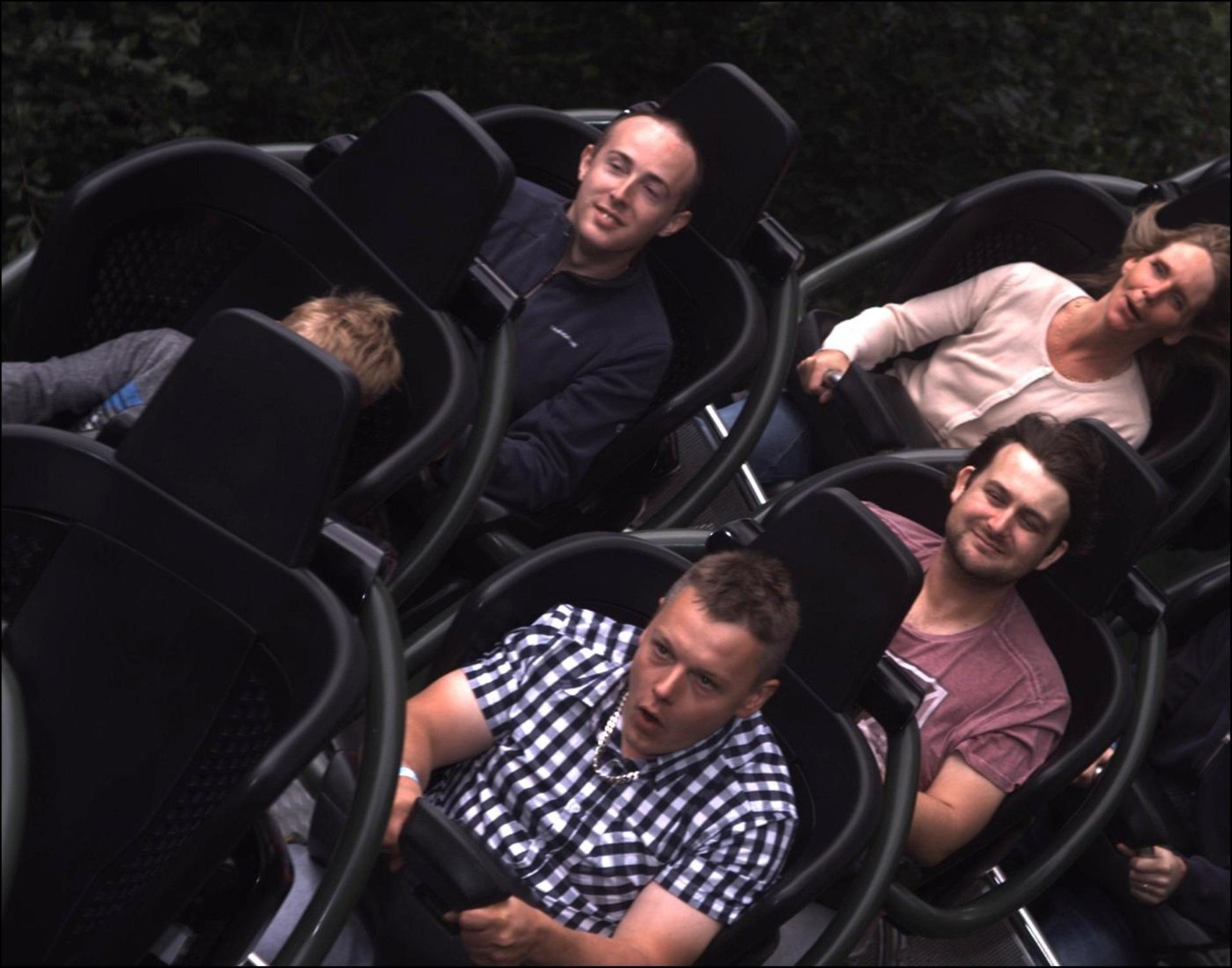
I’ve found that disability and access policies vary wildly from Park to Park: bigger parks have lifts, ramps and access to all rides, including the roller coasters, and some small parks have a blanket ‘not able to walk, not able to ride anything’ rule.
Two of my favourite theme parks, Alton Towers in Staffordshire, and Liseberg in Gothenburg, Sweden are some of the most accessible places I’ve been to.
Alton Towers covers around 500 acres of countryside with some of the best attractions the UK has to offer. There are some small hills that most mobility scooters or powered wheelchairs would handle with ease. There are also one or two steep hills which may prove difficult to negotiate in a chair but these can be avoided.
Disabled guests can park near the park entrance, you can park in the main car park and ride the monorail to the park entrance (trains are fully wheelchair accessible). Alton Towers charge for car parking, but just flash your blue badge to the car park attendant and they will direct you to the disabled car park. Keep your badge handy as you will need it in the park.
Alton Towers offers a Ride Access Pass system that allows guests with limited mobility or who are unable to queue to access rides via smaller flatter paths. These access points are normally well signposted via the ride exit. Staff member will mark your pass with a time that you can access the next ride. It’s like a virtual queue, but in reality the park is large enough that the time will be up before you’ve reached the next ride.
The Ride Access Passes are collected from the park ‘Box Office’ just inside the park on the right hand side.
The park use the same building for people to collect season passes, Ride Access Passes and priority passes and can attract a substantial queue within a few minutes of the park opening, it is offset by the overall slightly shorter ride queue time with the Ride Access Pass. You will need a Blue Badge or PIP letter to get the Ride Access Pass issued.
Alton Towers offer a wheelchair hire system (small deposits apply) they have a limited supply of manual wheelchairs, which I would highly recommend booking in advance.
Park Tickets can be bought online cheaper than on the gate, and you avoid the need to queue twice, first to get a park ticket and once again to get into the park. Once you are inside you will queue again for the Ride Access Pass or Wheelchair collection.
Our normal visit to Alton Towers we’ll head straight to the queue for the park entrance gates, the earlier you get here the more chance you have of getting through the gates and into the Box Office before the queues. Once we have our pass we can either go round in a clockwise or anti-clockwise direction. All of Alton Towers rides are located around the park perimeter.
I always tend to favour the Clockwise route as all of the park guests sprint for the bigger rides at the back of the park. This works well with the SkyRide which bypasses the new rides and takes you straight to the quiet areas first.
Rides we would recommend avoidingat the start of the day are The Wickerman, a brand new Wooden Roller Coaster with a very immersive storyline, fire and special effects. And Rita, a fast paced, intense launch coaster which launches you from 0-62mph in 2.5 seconds.These will get large queues from opening and will get quieter as the day goes on.
Walk past these and go on them on Lap number 2, or come back to them once you’ve done everything else.By the time we get there, other guests have moved on to the rides we have already done.
Most people don’t plan a route around a theme park, they run for the new ride and then move around the park quite randomly. This means you don’t get as on as many rides and you get to them when the queues are likely at their worst.
All rides will require you to transfer between a chair, scooter or walking aid and the ride vehicle and the park will normally insist on at least one helper in the event of a breakdown and ride evacuation.You can easily ride everything within a couple of hours, have a nice relaxed lunch break, and then head back out for more.
Most people wouldn’t think of a theme park for day out for someone with a disability. With easy access and a great selection of attractions for all ages and abilities, there isn’t really a lot to stop you!
Have you been to any theme parks lately? We’d love to hear your own top tips too!