Ruth is a secondary school English teacher with cerebral palsy and Perthes’ Disease, a condition that affects her hip and during National Inclusion Week, she speaks to us about working as a disabled person.
What I thought
that I was going to write about when I began this was how my teaching job has
changed for me since I acquired my crutches and wheelchair. There is certainly
a lot to say about that, how it was so strange to leave work on a Friday
without them and arrive the following Monday a fully paid up member of the
mobility aid community, how liberating it can be to wheel around corridors
without the energy-sapping pain of walking, how frustrating to encounter heavy
doors, poor ramp design and to negotiate those essential reasonable adjustments
without feeling as if I am making a public admission of professional failure.
Before that
Monday in May, I liked to flatter myself that my impairments were mostly
hidden. My gait probably invited speculation but the other things, scoliosis,
replacement hip, pain, rubbish spatial awareness were mine to talk about, if I
chose to, and I usually didn’t. And what I have realised is that, even though
my disability is now more visible, the not talking bit hasn’t really changed.
Of course my chair announces itself. Wherever I go, I will be remembered, no
longer any chance of getting away with crime, always a representative.
Sometimes I relish that, particularly at school where, on a good day, I can
confound expectation by opening that heavy door with a flourish or simply by
smiling whilst wheeling. I also sometimes long for those pre-wheelchair days
where I could go about my business incognito and not feel the pressure to be
such a shining example. More than anywhere else, at work, I just need to be
able to get on with my day.

What I have
also realised is that, however obvious some aspects of my impairment now are,
there will always be a lot that is concealed. I talk for a living but it’s not
so easy to explain to others the impact of pain and fatigue, how planned, and
paced, my existence has to be, that I am not choosing to walk one day, and not
the next and that I am always just a little bit scared that I will fail at the
carefully coordinated juggling act that is my working week, just because of
some seemingly inconsequential change over which I will, most likely, have no
control. That it will happen because nobody thought to include me in a crucial
discussion.
Since my
wheelchair, the greatest alteration to my working life stems from the reality
that I have joined a minority and a discriminated against, often-unrecognised, one
at that. I am not particularly angry about my physical state, but I am
frequently incandescent with rage about how disabled people are treated, about
poor access and thoughtless decision-making by those who, whilst understanding
very little, are convinced that they know what is best.
A couple of
years ago I visited Franklin Roosevelt’s house and it is a place that speaks
volumes about what it means to be a working disabled person. It shouldn’t,
because he was one of the most powerful people on the planet, died in April
1945 and, by now, much more should have changed. He concealed the impact of his
polio lest people doubt his leadership ability. There is only a handful of
photos of him using his wheelchair, he pushed himself to his physical limits
swimming, using crutches, hauling himself upstairs, rather than having a lift
installed, so that he built the muscles to deliver his speeches standing. His wheelchair was his own design because none
existed that would let him live his life at the pace needed for his work. The
integrated ash-tray was, on reflection, a little ill-judged, but I applaud his
urge to personalise.
And so if I
could say just one thing to employers, in fact to anybody who has a disabled
colleague and wants to know how to help them? Try asking them what they need
but, before you do, be absolutely certain that you are prepared to really
listen to their answer.
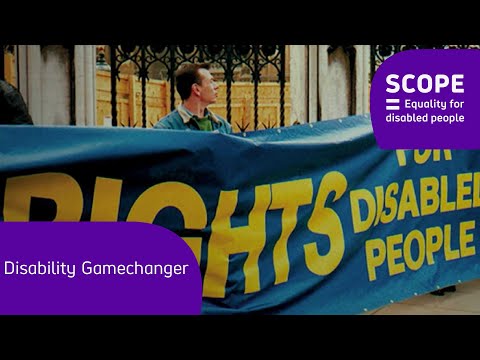
As part of our campaign Disability Gamechanger, we found that half of all disabled people feel excluded from society, including in the workplace. Watch our latest video below.
 https://www.youtube.com/watch?v=F8z9jIIeIw8
Has your impairment affected your career? Have you felt excluded from employment due to being a disabled person? How can employers be more inclusive? How can we drive inclusion in the workplace? Please share your thoughts and comments below.