At the beginning of July, I was
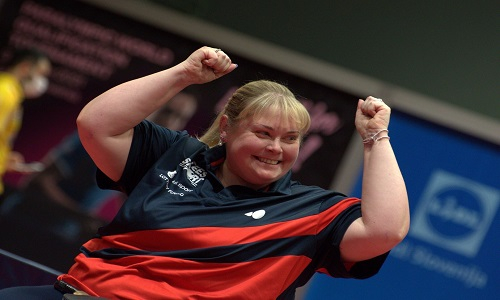
lucky enough to speak with Sue Bailey (Née Gilroy) MBE, Team GB Table Tennis
Paralympian 2021.
From her early life with Ehler’s
Danlos syndrome to why the Olympics and Paralympics should unify, Sue gave an
honest account of the reality of being an elite disabled athlete. Read on to find out more.
More about Sue
Hailing from Barnsley, South
Yorkshire, Sue is not only a Primary School teacher and SENDCO, but also a much-celebrated
five times Paralympian. With an
impressive list of accolades, Sue can count the following as achievements
gained in her sporting career:
- Two Commonwealth gold medals, a World
Championship Silver and 2 Bronze medals and four European Championship medals –
Gold, Silver and 2 bronzes including a silver won whilst 7 months pregnant with
her daughter, Lauren! She has also been the British National Champion for 23
years along with winning hundreds of International Medals over her career.
- Twice named BBC Disabled Sportsperson of the Year
for Yorkshire and Lincolnshire.
- An MBE awarded in 2009 for services to table
tennis, youth work, coaching and charity work.
- An honorary doctorate awarded by Sheffield
Hallam University in 2009.
What makes these all the more
impressive is Sue lives with Ehler’s Danlos Syndrome, Fibromyalgia, Chronic
Pain Syndrome, bones missing in both legs, a fused right wrist along with other
neurological issues that significantly impact her everyday life.
Our chat
Doing my very best Michael
Parkinson impression and armed with questions posed by our community members, I
asked Sue about her life as a disabled sports-star, the impact of COVID-19 on Tokyo
training and what more could be done to attract disabled people into
sport.
Visit this YouTube video to hear
Sue’s thoughts.
 https://youtu.be/DG9c08QFRis
More on Sue’s life
off court
- What
sparked your interest in table-tennis, and have you always had a natural
talent?
“I’ve always been more into your
bat and ball skills, but my mum and dad used to play table-tennis in the
Sheffield able-bodied league. So, when I
was 7, I used to insist on going to watch them play in the league and I really
wanted to play and enjoyed it. My dad
started coaching me from a young age, before I used a wheelchair, and I started
playing in the league and won a competition at 15 but by then my knees had
started dislocating and I was falling a lot and injuring my wrists, so I
actually retired at 15 and went into a wheelchair at 18 full-time.
After a few years I saw a
disabled sports club, went down there and had a go at different sports in the
wheelchair. I played basketball,
wheelchair hockey as well but then I started table-tennis again and for the
first month I couldn’t get the ball over the net because you’re much lower in a
wheelchair so that was a nightmare. Then
I took up archery and shooting. For 2
years I did archery, shooting and table tennis to quite a high standard until I
was spotted by GB at a competition I’d won and they discussed if I wanted to
take my sport to the next level then I had to choose which sport I wanted to do
as I wouldn’t be able to train in all three with the hours needed, so I went
with the one I loved… so it was my mum and dad’s fault really!”
- A lot of the members who visit our community
are starting to use a wheelchair and are scared about that change to their
life. It’s a period of adaption, isn’t
it? How did having a wheelchair impact
your life?
“For several years I felt like my
life had just come to an end because I had to leave University and transfer
back up here, I was a drummer in a rock band, and I couldn’t get on the stage
anymore. I used to travel around the
world in an orchestra playing flute, as-well as doing my sports. So, for me it was just so difficult when I
went into a wheelchair… I was engaged at the time, and the day I found out I
was going to be in a wheelchair for the rest of my life, we split up because he
said it was embarrassing me always falling down before I’d even had a
drink. So, it was very challenging, and
it is difficult coming to accept that you are using a wheelchair, you can’t get
around like other people and just life in general if you are in a wheelchair is
difficult. There just isn’t the
access.
It’s adapting and coming to terms
not only with your disability, but initially I let my disability rule my
life. I turned that around and thought, actually,
I don’t want my disability to control my life.
I want to show my children what I can do in a wheelchair. It’s a very difficult time during the
transition time, it’s persevering and changing your mindset – there’s nothing
you can’t do from being in a wheelchair, you just have to do it slightly
differently.”
- Do you have any favourite memories of
Paralympics gone by? And what are your
hopes for this year?
“My favourite Paralympics was
Sydney which was my first. That is such
an amazing place and we stopped on for 3 weeks after that, me and my children,
which was fantastic. Obviously, London
was really special because you’re competing in front of a home crowd which is
so different when people are cheering for you and not against you! I loved Beijing and Rio particularly as I came
4th in Rio and that was the best I’d done. They changed the ruling a few weeks after
where both players would get a bronze medal, so I would have actually got a
bronze medal now because you don’t have to play off for bronze. So, the
Paralympics is the only medal that’s eluded me… and I’m still desperately
trying to get in memory of my father.
This time I have a team partner
so hopefully, I’ve only ever been able to play a team event once and that was
in Beijing, so everything doesn’t focus on the singles, and I can relax a bit
more and not put everything on those matches which puts you under more pressure
because you know you have that team event as well. It’s very rare in all my years I’ve been able
to do that, so I’m looking forward to the team event.”
Over to you:
A huge thank you to Sue for her time and words, we will all
be cheering you on in Tokyo! If anyone
wants to leave a message of support for Sue below, feel free.
While thinking more about her interview:
- Can you relate to Sue’s feelings around transitioning
to using a wheelchair?
- Which Paralympics have you most enjoyed over the
years?
- What more do you think could be done to break
down barriers and encourage disabled people to trying sport?
Let us know your thoughts.