APD
Comments
-
Hi to both of you.
Until 2019 I used to post links to international research papers regarding many aspects of Audiology to the UK CiteULike medical research library, which had input from multiple UK based medical research sources.
CiteULike was closed down in 2019, and the managers sent out long lists of research papers to all their members in the hope that we could add the research online elsewhere.
I found the Zotero web site which is free to use and added my collections of Auditory Processing Disorder research. And later I found Bookmax where I was able to create multiple folders to list my PubMed Auditory Processing, Dyslexia, and Invisible Disability research paper collections.
I don't think i have mention this before but back in 2000 I set up an OldAPD group on Yahoo initially to communicate the only other adult who would admit that they had APD who lived in Australia. After a few years another US based member of this group added an APD article to Wikipedia. After he wrote it he asked me to add the research papers to support his article to help explain the current information sources. I had to become a Wikipedia User (editor). And after his post other members of the group would ask me to find some research to explain some of the other medical issues they had been diagnosed with. And this is how my multiple PubMed Invisible Disability research paper collections began to be created. Unfortunately in around 2018-2020 Yahoo made some technical changes to their online groups which were not APD friendly so we closed the OldAPD group down.
I have not done much on Wikipedia in recent years as I now in my early 70s, however my Wikipedia User page still exists where i listed many of my PubMed research paper collections and some links to some UK based articles. So you might like to have a look at my Wikipedia User page, which uses my online internet name Dolfrog
1 -
 0
0 -
My Zotero Auditory Processing Disorders Research Paper Groups
As you may be aware the UK CiteULike research paper collection web site closed down at the end of March 2019.
As a result I have had to move my research paper collections to alternative research paper compilation web sites.
Zotero is free and helps to collect, organise, and share research, you could have a look at theZotero Home page
My new Zotero “Auditory Processing Disorders” Group, which includes some subgroups regarding related issues, is at
And below are listed some of the subgroups:-
the “Amblyaudia” subgroupthe “Audiovisual Integration” subgroup
the “Auditory Gap Detection” subgroup
the "Auditory Processing Disorders" subgroup
the “Auditory Perception" subgroup
the "Auditory Temporal Processing" subgroup
the "Maturation of the Auditory System" subgroup
the “Speech in Noise” subgroup
0 -
My Evernote Auditory Processing Disorder Web Pages & Some Graphics.
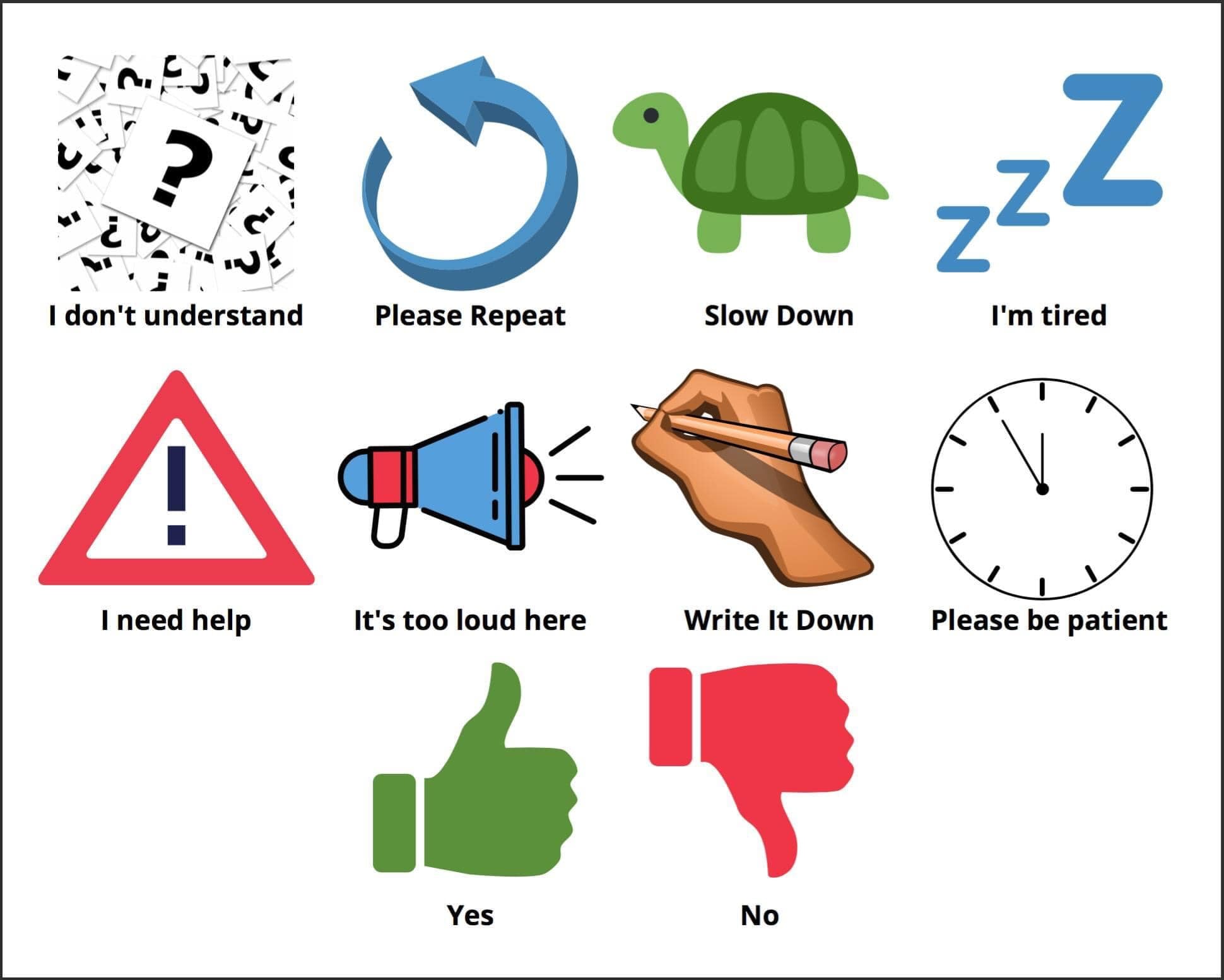
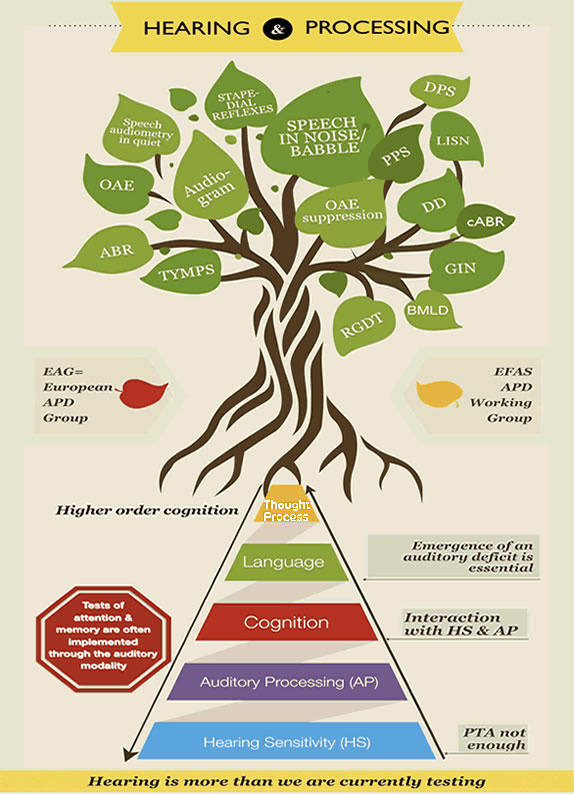
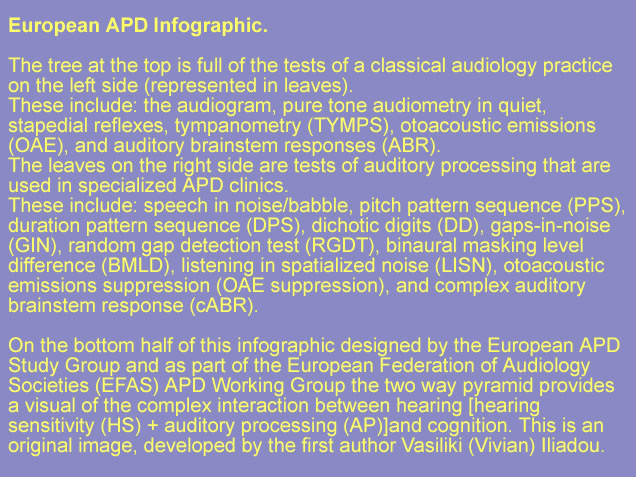
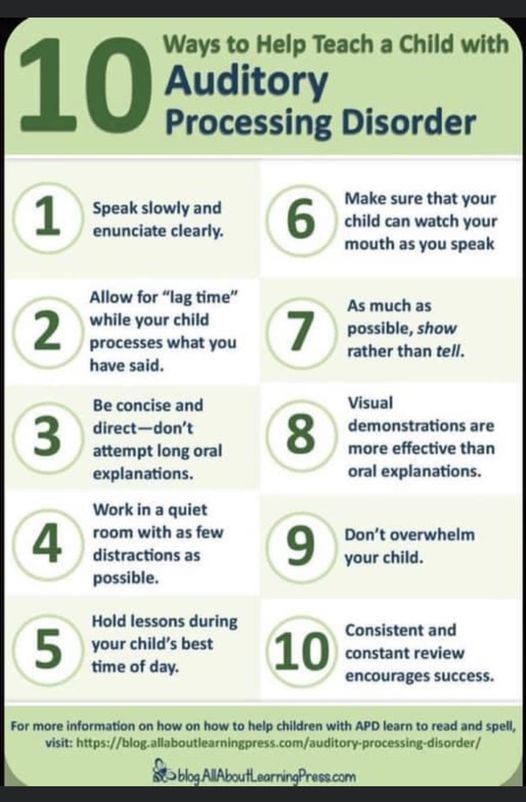
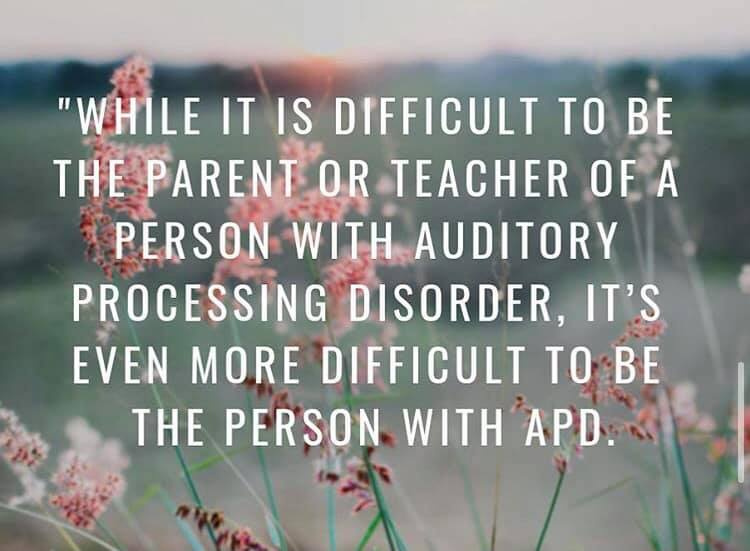
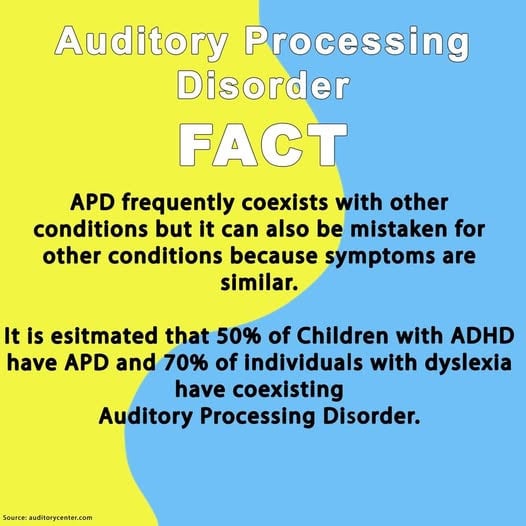
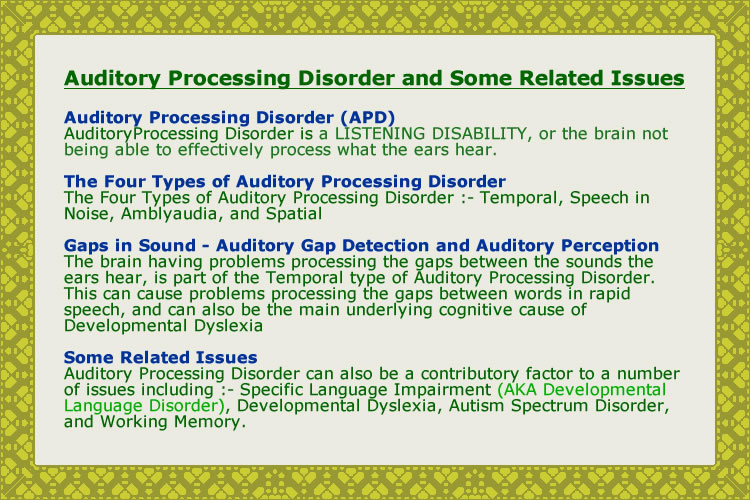
To help explain Auditory Processing Disorder (APD)
1 -

 0
0 -
 0
0 -
0
-
 0
0 -
 0
0 -
All this shows me how let down i was as a child and how mucj i struggled and still struggle to this day even in a world of tech its still no easier as i said i didnt relise how bad it was until i joined this forum trying to write and understand where words go having to read posts over and over to umderstand
1 -
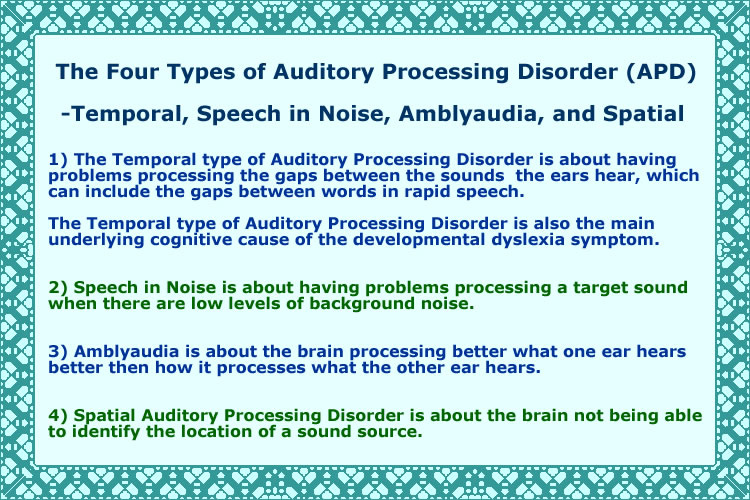
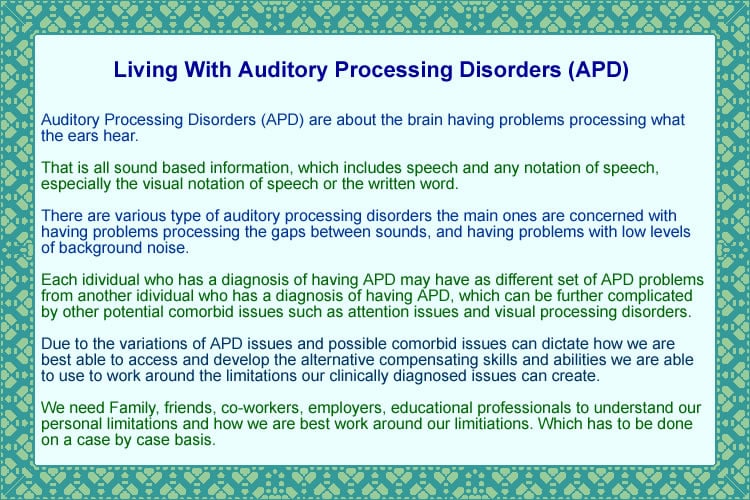
There are 4 types of APD as explained by international research of the last few decades.
And the current leading research group are a European based group which includes one UK Audiologist Doris-Eva Bamiou who is based at UCL.
The type of APD most explained around the world is the "Speech in Noise" type which is about low levels of background noise preventing the brain processing the speech sounds in that noisy environment, and some find that low gain hearing aids may help.
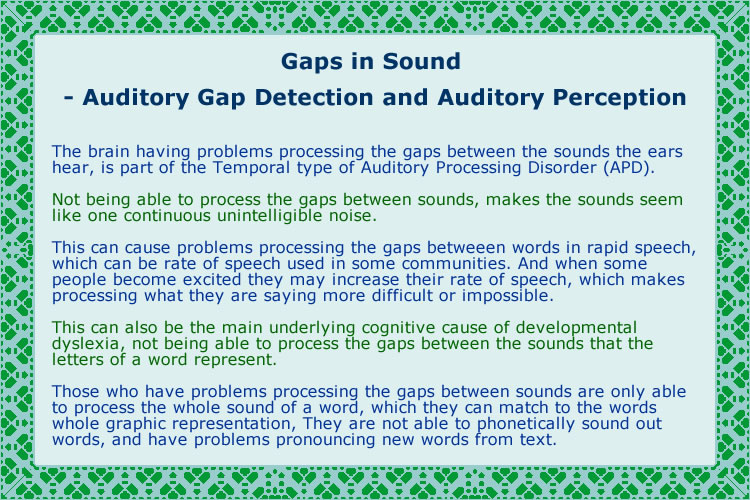
The Temporal type of APD is the type that some populations do not want to recognise, as one of the key tests the Random Gap Detection Test tries to measure the size of gap between the sounds the ears hear the brain is able to process and identify. When i did the test in 2003 it did not include a gap between sounds large enough for me to identify, which explained why i have problems with rapid speech which to me is one continuous noise, and explains my dyslexia as I am not cognitively able to use phonics. Some communities in the UK have a rapid rate of speech, so I avoid visiting those areas.
The Spatial type of APD is about the brain not being able to identify the location (direction of a sound source) of a sound the ears hear.
The AmblyAudia type of APD is about the brain only being able to process what one ear hears and not being able to process what the other ear hears. This type is the most recent type to be explained in the last decade. it was first explained by a lady who was a student member of the USA online APD support group I join in the late 1990s
You might like to have a look at my related PubMed research paper collections
My PubMed "Auditory Processing in Background Noise" research paper
collectionMy PubMed "Auditory Temporal Processing" research paper collection
My PubMed "Auditory Spatial Awareness" research paper collection
My PubMed “Amblyaudia” research paper collection
I have more related research paper collections if you want to see them just ask.
0 -


 1
1


Categories
- All Categories
- 15.9K Start here and say hello!
- 7.6K Coffee lounge
- 107 Games den
- 1.8K People power
- 160 Announcements and information
- 25.3K Talk about life
- 6.2K Everyday life
- 503 Current affairs
- 2.5K Families and carers
- 874 Education and skills
- 2K Work
- 584 Money and bills
- 3.7K Housing and independent living
- 1.2K Transport and travel
- 644 Relationships
- 1.6K Mental health and wellbeing
- 2.5K Talk about your impairment
- 883 Rare, invisible, & undiagnosed conditions
- 942 Neurological impairments and pain
- 2.2K Cerebral Palsy Network
- 1.3K Autism and neurodiversity
- 40.9K Talk about your benefits
- 6.1K Employment & Support Allowance (ESA)
- 20.3K PIP, DLA, ADP & AA
- 9.1K Universal Credit (UC)
- 5.3K Benefits and income