APD
Comments
-
 0
0 -
0
-
 0
0 -
 0
0 -
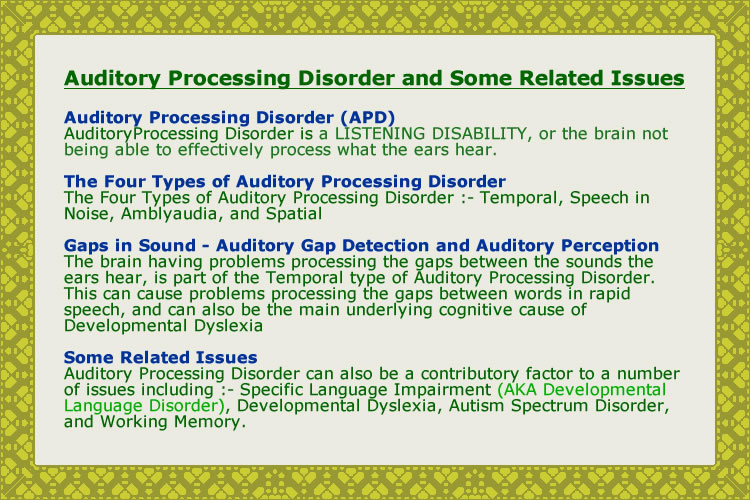
There are 4 types of APD as explained by international research of the last few decades.
And the current leading research group are a European based group which includes one UK Audiologist Doris-Eva Bamiou who is based at UCL.
The type of APD most explained around the world is the "Speech in Noise" type which is about low levels of background noise preventing the brain processing the speech sounds in that noisy environment, and some find that low gain hearing aids may help.
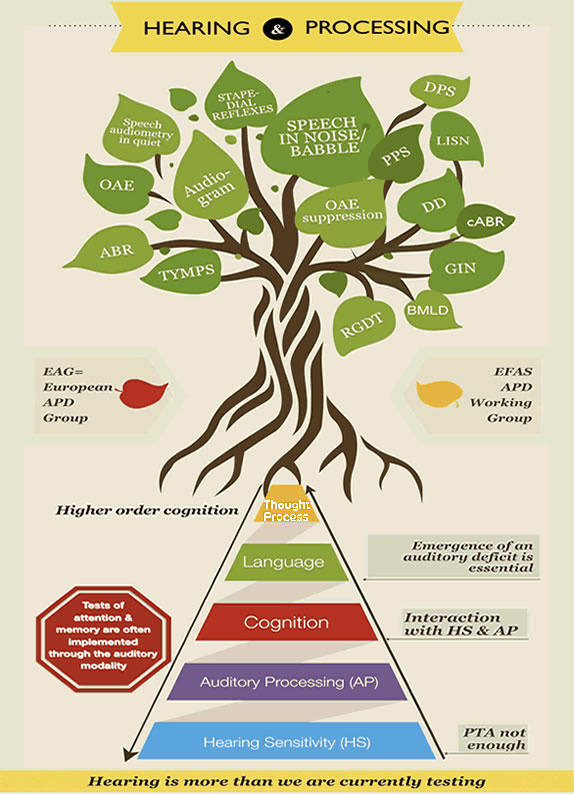
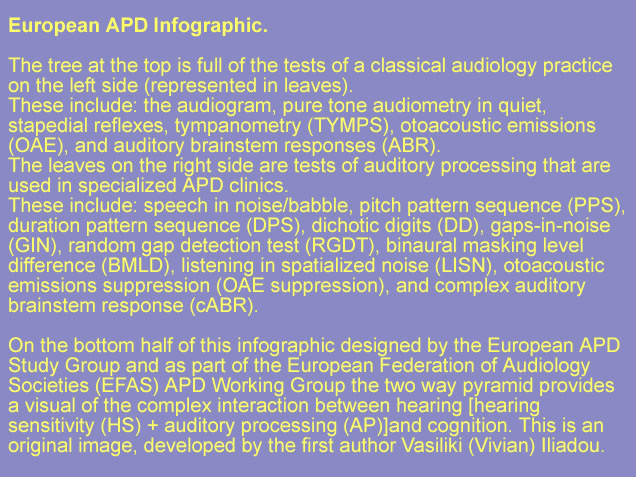
The Temporal type of APD is the type that some populations do not want to recognise, as one of the key tests the Random Gap Detection Test tries to measure the size of gap between the sounds the ears hear the brain is able to process and identify. When i did the test in 2003 it did not include a gap between sounds large enough for me to identify, which explained why i have problems with rapid speech which to me is one continuous noise, and explains my dyslexia as I am not cognitively able to use phonics. Some communities in the UK have a rapid rate of speech, so I avoid visiting those areas.
The Spatial type of APD is about the brain not being able to identify the location (direction of a sound source) of a sound the ears hear.
The AmblyAudia type of APD is about the brain only being able to process what one ear hears and not being able to process what the other ear hears. This type is the most recent type to be explained in the last decade. it was first explained by a lady who was a student member of the USA online APD support group I join in the late 1990s
You might like to have a look at my related PubMed research paper collections
My PubMed "Auditory Processing in Background Noise" research paper
collectionMy PubMed "Auditory Temporal Processing" research paper collection
My PubMed "Auditory Spatial Awareness" research paper collection
My PubMed “Amblyaudia” research paper collection
I have more related research paper collections if you want to see them just ask.
0 -


 1
1 -
This was the first UK APD web page that tried to explain Auditory Processing Disorder in 2002
0 -
Here's a link to the current APD Support UK's website as the above website is no longer available.
0 -
I created and managed the APDUK web site 2002-2014.
In 2009 I set up a support group on Facebook "Auditory Processing Disorder(APD) which now has over 26,000 members, and where I have been able to provide links to and pdfs of international articles and research papers that best explain the 4 types of APD.
https://www.facebook.com/groups/122185968465
There are some professional audiologists and support workers who are members of my group, including the owner of the most used UK APD hearing clinic.
0 -
0
-
why are you advertising this
0 -
This one of the few Auditory Processing Disorder clinical assessment providers who provide the key assessment test in my Auditory Processing Disorder assessment and diagnosis, the Random Gap Detection Test.
The Random Gap Detection test tries to measure the ixe of gap between sounds that the ears hear, the brain is able to process and identify. When I did the test in 2003 it did not include a gap between sounds large enough for me to identify, which explained my dyslexia as i am not cogntively able to use phonics, and it explained m Specific Language Imapairment as I am not able to process and identify rapid speech which to me comes across as one continuous noise.
The other Auditory assessment test Auditec provide should be included in an individuals assessment of Auditory Processing Disorder.
Since I was diagnosed with Auditory Processing Disorder (APD) in 2003 I have not been able to find any of the much needed lifelong support for those diagnosed as having APD including all of my family our three now adult sons and my wife who now have a clinical diagnosis of having APD. So this web page may help educate the UK audiologists, speech and language pathologists, and psychologists who should ne working as part of a multi discipline team to begin providing our much needed support. And increase the public understanding of living with APD.
0 -
0
-
Thanks for raising awareness of ADP @dolfrog and sharing your knowledge and information 😊
1





Categories
- All Categories
- 16.4K Start here and say hello!
- 7.7K Coffee lounge
- 120 Games den
- 1.8K People power
- 200 Announcements and information
- 25.8K Talk about life
- 6.2K Everyday life
- 434 Current affairs
- 2.5K Families and carers
- 897 Education and skills
- 2K Work
- 629 Money and bills
- 3.8K Housing and independent living
- 1.2K Transport and travel
- 678 Relationships
- 1.6K Mental health and wellbeing
- 2.6K Talk about your impairment
- 885 Rare, invisible, & undiagnosed conditions
- 947 Neurological impairments and pain
- 2.3K Cerebral Palsy Network
- 1.3K Autism and neurodiversity
- 41.7K Talk about your benefits
- 6.2K Employment & Support Allowance (ESA)
- 20.6K PIP, DLA, ADP & AA
- 9.5K Universal Credit (UC)
- 5.4K Benefits and income