Autism Acceptance Month April 2026


This month, we're supporting Autism Acceptance Month and we hope you'll join us!
Autism is a lifelong neurodivergence that is characterised by different ways of thinking, feeling, and communicating.
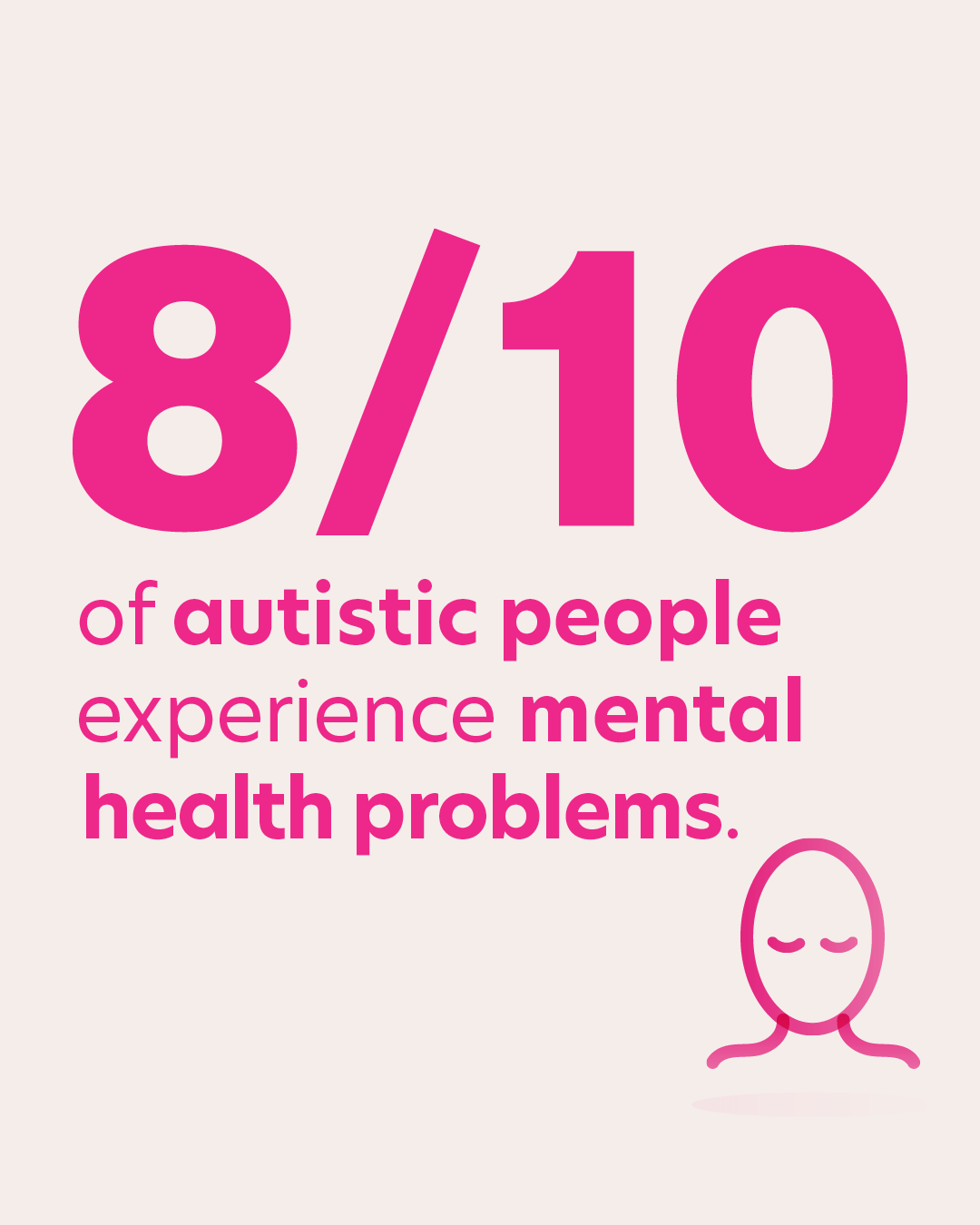
- Social & Sensory Experience: Socialising can be confusing or exhausting, and busy environments can lead to sensory overload.
- Behavioural Patterns: A preference for routine and repetitive movements (stimming) for emotional regulation are common.
- The Impact of Masking: Many autistic individuals "mask" or hide their traits to fit into societal norms, which can lead to mental health challenges.
Source:
The National Autistic Society have a Pledge Wall for people to pledge their understanding and their support. Maybe you could add a pledge?
We'd love to hear your own experiences if you're comfortable in sharing.
Comments
-
My disability Auditory Processing Disorder (APD), the listening disability, can be one of the conditions which can combine to be part of an individuals multiple combination of issues that are the cause of an individual's Autism.
You could have a look at my PubMed "Autism" research paper collection, which I developed to help me understand those who may have Autism, as some of the members of my online Facebook support group have APD as part of their Autism.
3 -
I've had people judging me for having Autism. Some say I managed all this time. I was diagnosed age 53 I'm 59 now. They knew me for a year . They didn't see the struggle that I've had and still have. I been told there was something wrong with me or I'm to autistic. I hate myself feeling like a freak. My daughter has it and seems to cope better.
2 -
Same here, So sorry this has happened to you
0 -
I have several family members who are on the spectrum. Ranging from my 40 year granddaughter who also has learning disability. Needs 24 care. My daughter diagnosed in her fifties who struggled all her life to try to fit in. My 21 year old grandson who is very clever but struggles. I’m proud of everyone who fight on daily basis.
6 -
Community_ScopePosts: 2,200 Scope Online Community CoordinatorApril 14edited April 14Just a quick note on language here, terms like “mild autism” can mean different things to different people. Some use it informally, but others feel it can minimise their experiences or come across as outdated.Some organisations are also moving away from this kind of terminology.
For example,Psychiatry UKexplains why labels like this can be unhelpful:
“You cannot be a ‘little bit’ autistic. Autistic people may find it harder to be believed or supported by those around them if they are associated with a higher level of functioning, and their needs can be overlooked, meaning that they can feel invalidated, let down and excluded.”
We hope that helps explain why people may feel differently about different terms. To keep things respectful for everyone, it’s generally best to avoid ‘rank’-based labels where possible and instead describe individual experiences or support needs.4 -
Yesterday was AD10 - 10 years since receiving my autism diagnosis.
I didn't feel like celebrating as I'm pretty miserable after months of harassment from UC but it's a date I'll never forget. The first 'assessment' amounted to 30 minutes of shouting at each other and it took another two years to secure the second assessment.
There is no 'over-diagnosis' of these disorders just historical failures to recognise the traits, noteably in women. My GP ""Why do you want the diagnosis? You've managed all this time". The first guy "Why do you want the diagnosis? There's no cure".
I've been avoiding completing my ADHD assessment forms as it will bring up all the stuff I don't want to think about; the years of not being believed or understood because I'm a woman. I had removed myself from a waiting list then changed my mind as I could benefit from medication but I'm also worried that certain meds are in short supply.
If I can access the portal then I'm miserable enough to do this now. I've survived worse things.
Happy Autism Acceptance Month everyone 🙌
( we have autism awareness but the understanding and acceptance has a
littlelong way to go yet 😉 )6 -
Thanks for sharing @WhatThe 😊
2 -
Must admit I feel the same as the Doctors now…what's the point in getting an Autism diagnosis?
I wouldn't take any meds for it. Can't see any real help for it as an adult. Few years ago I was hoping it would at least give some backing to my requests for reasonable adjustments with health services which I never have been able to access effectively. But honestly I haven't seen any evidence to support that either.
My GP did prevent me applying for the assessment a few years ago. Then relented and referred me, but the triage team then said I couldn't go any further with it anyway, due to lack of historical evidence. I did try for a private diagnosis after that, but couldn't travel to the centre and they wouldn't do it remotely at the time.
Is it worth me trying for a diagnosis again in future? From a practical point of view, I just can't see it. I already know which practical adjustments I need for things now, yet people either refuse point blank or do the exact opposite as if it's some sort of 'challenge' to prove me wrong!
I understand many of you get a feeling or relief or acceptance etc for your own mind from the diagnosis, but I really don't think that would work on my mind. If I ever do try for a diagnosis again future, it will be interesting to see whether I am wrong about that.
1 -
Thank you for sharing this with us.
It must have taken a great deal of courage.
You must do what is best for you.
Take care.
1 -
There are no meds specifically for autism - it's meds for ADHD that I'm after.
I knew nothing about autism until my teenage daughter identified mine and it was very traumatic to accept I had struggled all those years without appropriate support. I needed validation after not being listened to and not believed for my entire life. This rather simple explanation was enough and it was like being reborn.
3 -
It's different for girls - everything is different for girls!
1 -
Autism and ADHD are increasingly recognised as co-existing conditions in women and girls.
Research indicate that 50% to 70% of autistic individuals also have ADHD highlighting the importance of understanding and diagnosing these conditions together.
Women and girls often present differently than men, and many may be misdiagnosed or overlooked due to outdated stereotypes.
3 -
I knew nothing about ADHD until I joined this forum 2+ years ago!
0 -
Yeah, I get that. It's anti-anxiety meds that I was thinking of with regards to managing autism. But I've already refused those multiple times because I can't cope with the side effects due to extreme over-sensitivities.
I am pleased the diagnosis helped you, and others on here and in the wider world. I just don't see how it would help me when what I need is practical change and practical adjustments to make the real world accessible. Perhaps I am in a minority with that.
I don't really want to start a guys vs girls debate. I never was a conventional guy myself so wouldn't know what it's like for them anyway.
1 -
There are multiple conditions including ADHD which can combine to be the causes of an individuals autism. This includes my lifelong disability Auditory Processing Disorder the listening disability. I posted a link to my PubMed Autism research paper collection which explains the possible multiple issues when I first found this discussion
1






Categories
- All Categories
- 16.4K Start here and say hello!
- 7.8K Coffee lounge
- 123 Games den
- 1.8K People power
- 188 Announcements and information
- 25.9K Talk about life
- 6.2K Everyday life
- 444 Current affairs
- 2.6K Families and carers
- 889 Education and skills
- 2K Work
- 630 Money and bills
- 3.8K Housing and independent living
- 1.2K Transport and travel
- 674 Relationships
- 1.6K Mental health and wellbeing
- 2.6K Talk about your impairment
- 885 Rare, invisible, & undiagnosed conditions
- 949 Neurological impairments and pain
- 2.3K Cerebral Palsy Network
- 1.3K Autism and neurodiversity
- 41.8K Talk about your benefits
- 6.2K Employment & Support Allowance (ESA)
- 20.6K PIP, DLA, ADP & AA
- 9.5K Universal Credit (UC)
- 5.4K Benefits and income