Celebrating CP Stories: Georgia Vine

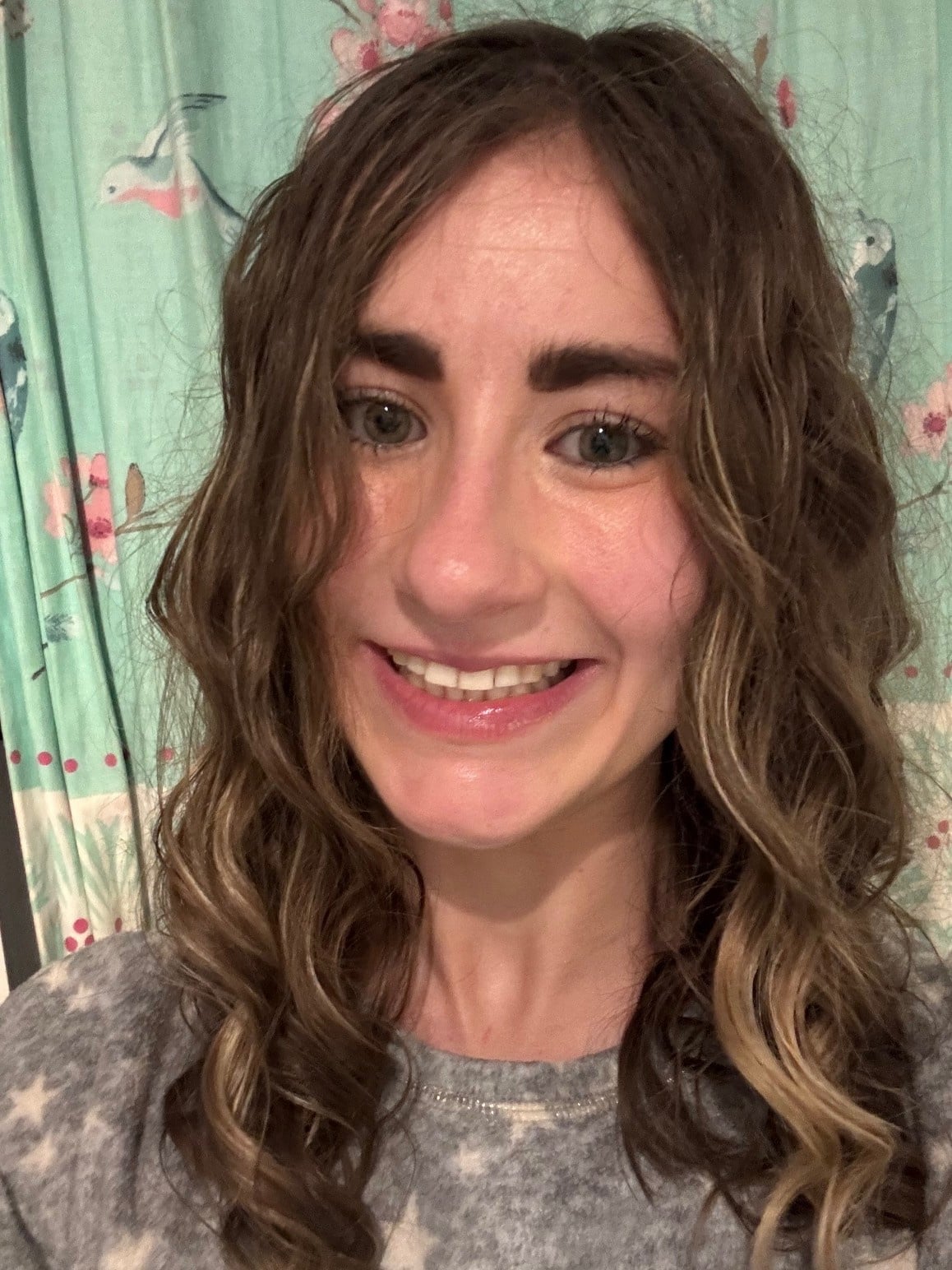
CP Awareness Month is here! In honour of our upcoming Employment CP Roundtable on Wednesday 18 March, I interviewed Georgia Vine. Georgia is an Occupational Therapist, PHD candidate, and blogger.
1.Your story
- Tell us about yourself
- How did you decide you wanted to be an occupational therapist (OT)?
I’m Georgia, a disabled activist and an occupational therapist. I use my experiences as a disabled person and as an OT to highlight ableism in the profession. I always wanted to work in health care, even when I was young. But I had many interests, so choosing a clear path felt difficult.
Occupational therapy stood out because it offered so much variety. I liked knowing that I wouldn’t be stuck in one type of role.
When I was 17, I was thinking about studying OT. I was at a driving assessment, and the assessor asked what I wanted to do after college. I said “occupational therapy.” She turned to me and said, “I’m an occupational therapist.” That moment, and the conversation that followed, helped me realise that OT was the right path for me.
2. Your blog – Not So Terrible Palsy
- Why did you start the blog?
- Which post means the most to you?
I started Not So Terrible Palsy in 2019. I began it on a whim after writing for other websites and building my confidence. I didn’t plan to link it to my studies until one of my brilliant lecturers encouraged me to.
The blog has since become a big part of my identity. It helped me make sense of my experiences as an OT student and later as a qualified OT.
My favourite post is the interview I did with my parents about my transition into adulthood. It was the first post where I challenged the profession directly. That was a turning point for me, and I think it helped my publisher notice my work.
3. Your book
- Why did you write Occupational Therapy, Disability Activism, and Me?
- What do you hope OTs learn from it?
- If you could change one thing about OT practice, what would it be?
I wrote the book because I wanted people to have something they could relate to. Many OTs join the profession because they have seen OT firsthand. This often means they also have disabilities. But the profession has a long history of being shaped by non‑disabled, middle‑class white women. Because of this, ableism isn’t talked about enough. I wanted to share my story to help open up that conversation.
I hope OTs finish the book feeling able to challenge themselves. I know my book won’t change the whole profession, but if it helps people think more critically, then it has done its job.
At first, I wasn’t sure what I wanted the book to be. I wondered if I should include other people’s stories or write it in a more academic style. I’m glad I chose to tell my own story because it allowed me to be clear, honest, and thorough. Readers have said this helped them.
If I could change one thing, it would be encouraging people to feel more comfortable with uncomfortable conversations. We often avoid change because we think it won’t make a difference. But that mindset stops progress. Small changes matter just as much as big ones. We should never forget the power of even one small shift in practice.
4. OTs and disabled people
- Lots of disabled people have tough experiences with OTs. What needs to change?
- What does good OT look like?
This is a difficult question, and there are many angles to explore. It can also feel like a postcode lottery. Some local services are modern and person‑centered, and others are not.
I believe the biggest change OTs need is more cultural humility and truly person‑centred practice. OTs are not the experts in people’s lived experiences - the person is the expert. That should always guide us.
Sometimes OTs focus on what they think people should work on instead of what the person actually values. For example, if someone wants to get back to playing a board game they love, that should be the focus - not brushing their teeth. Yes, health promotion is important, but goals that matter to the person should come first.
5. Advice
- What advice would you give someone who has cerebral palsy and is thinking about a career in occupational therapy or allied health in general?
- What advice would you give a person who is struggling to accept their cerebral palsy and is asking for help?
The beauty of occupational therapy is the number of different places you can work. If you’ve only seen OTs in the community and think you can’t do that job, remember that this is just one part of OT.
Practice can be adapted, and reasonable adjustments are your legal right. Not doing something the “typical” way doesn’t mean you can’t do it. OTs work in hospitals, schools, prisons, communities, and many more places. If you want to be an OT, there will be a role that suits you.
If you want a career in health, research your options and ask questions on social media. There are many disabled healthcare professionals out there, even if they are not always visible. Someone with a similar disability will have walked this path and can support you.
Accepting a disability has no right or wrong timeline. The CP community is large and supportive. Don’t be afraid to reach out to someone you follow or ask for help. CP is common, and I promise you will find someone to talk to.
6. Fun quick fire
- One OT myth you’d scrap?
- One hope for the CP community in 2026?
I’d scrap the myth that occupational therapy is only for certain people. OT is for everyone - from before birth right through to end of life. An occupation is not just a job. It’s any activity that matters to you. Whatever that activity is, an OT can help.
My hope for the CP community in 2026 is that it continues to grow. I’d also love to see more research published about adults with CP. We need that research urgently.
Thank you Georgia, for your valuable insights and advice. You can read Georgia’s blog
Categories
- All Categories
- 16.4K Start here and say hello!
- 7.8K Coffee lounge
- 123 Games den
- 1.8K People power
- 191 Announcements and information
- 25.9K Talk about life
- 6.2K Everyday life
- 444 Current affairs
- 2.6K Families and carers
- 889 Education and skills
- 2K Work
- 630 Money and bills
- 3.8K Housing and independent living
- 1.2K Transport and travel
- 674 Relationships
- 1.6K Mental health and wellbeing
- 2.6K Talk about your impairment
- 885 Rare, invisible, & undiagnosed conditions
- 949 Neurological impairments and pain
- 2.3K Cerebral Palsy Network
- 1.3K Autism and neurodiversity
- 41.8K Talk about your benefits
- 6.2K Employment & Support Allowance (ESA)
- 20.6K PIP, DLA, ADP & AA
- 9.5K Universal Credit (UC)
- 5.4K Benefits and income