My
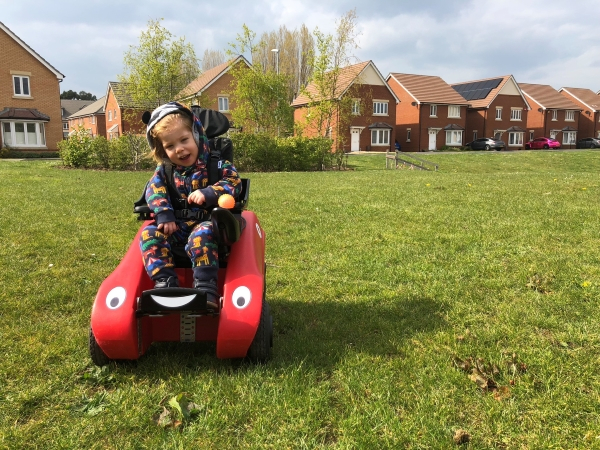
name is Charlotte, and my daughter Amelia has Cerebral Palsy. She is three
years old and very cheeky. She loves to sing nursery rhymes and clap and dance
to music. I blog occasionally about some of the joys and challenges of having a
disabled child and mental health awareness.
We
all know that having a child can be expensive. According to Child Poverty
Action Group, the typical cost for a couple raising a child to 18 is £153,753.
When I found out I was pregnant, I came up with a plan for managing costs
whilst I was on maternity leave and for childcare costs when I went back to
work. However, what I could not plan for was the additional costs that have
come with Amelia’s additional needs from Cerebral Palsy.

Scope
did a study in 2019 about the Disability
Price Tag which
found that families with disabled children face an average of £581 a month of
extra costs. This would suggest that the average of raising a disabled child to
18 is an added £125,496. That would nearly double the average cost of raising a
child!
In
Scope’s Disability Price Tag report, they highlight three categories of
additional costs most commonly experienced:
- Specialist goods and services
- Greater use of non-specialist goods and services
- Higher costs for non-specialist goods and services
I
want to share two examples of where we have faced additional costs due to
Amelia’s disability.
Higher Costs for non-specialist goods and services
One
of the costs many parents will face is childcare costs. When I went back to
work after maternity leave, I found a nursery which seemed right for Amelia. At
9 months old, Amelia did not have defined additional needs in comparison to the
other children in the baby room. However, as Amelia got older, she needed more
support to be involved in age appropriate activities like crafts or sand play.

The
solution offered by the nursery was to provide 1:1 support for her through the
day. They said that we would need to fund this as there was no available government
funding to support a child under the age of two. This doubled our nursery costs
from £45 a day to £90 a day. They still struggled with her needs and we ended up
moving to a different nursery who do not ask us to pay any extra for additional
support. Despite this, they are a more expensive nursery and we now pay £75 a
day. This is a saving to us from the other nursery, but still a considerable
amount more than we had originally planned for!
Specialist Goods and Equipment
We
purchased a Firefly Go To seat which is a supportive seat insert that helps
Amelia to sit on chairs, in a shopping trolley and in swings. One of the
reasons we bought it was so that we could use it on an airplane when we go on
holiday. We had previously used it for our holiday in May last year. We had a
trip to Disneyland Paris booked for September, with a different airline from
our previous holiday. When we contacted the airline to inform them we would be
bringing the insert, they said we could not use it as it was not on their
approved list. None of the three pieces of equipment on their approved list were
suitable for Amelia.

They
offered to refund our flights, but obviously we still wanted to go to
Disneyland, and we would have lost the money on tickets and hotel! After a lot
of research, we found a car seat which was on their approved list and suitable
for Amelia. The airline had to grant us a concession to use it, but they did
eventually agree. We had to pay £95 for the car seat so that Amelia could use
the plane ticket we had paid £75 for. That was in addition to already having
purchased a specialist piece of equipment which was suitable for other airlines.
Worries about the future
I
know that we are lucky that we could afford to do this, and to even have the
trip to Disneyland in the first place. But I do worry about the future. There
might be unexpected costs to come and if we don't have the money, the
concessions we could be forced to make would have a detrimental impact on
Amelia.
Scope’s
report calls on the government to take action and reduce the impact of these
additional costs on families like ours. I would also like to call on companies
to take a more common-sense approach when dealing with disabled people. For
example, having a consistent set of rules about what equipment is allowed
on-board an airplane, so that if we must purchase something, we only have to do
it once!
Charlotte
blogs about some of the joys and challenges of having a disabled child and
mental health awareness. You can find her blog at ARG has CP.
Do
you have extra costs due to having a disabled child? What do you believe needs
to be done to reduce this? Let us know in the comments below!