How accessible is Eurostar?

Source from The Independent
Eurostar has introduced improvements on its trains for travellers with disabilities – Carrie-Ann Lightly boards at St Pancras to see how they stand up in practice
Train travel gave me my independence.
In my early twenties, it opened up a version of the world I hadn’t thought possible. It was the first time I realised I could travel solo as a disabled person, with assistance in place, navigating unfamiliar stations and cities on my own terms. Week after week, I travelled up and down the UK for work, building confidence with every journey. There was a quiet satisfaction in arriving somewhere new, knowing I’d made it happen myself.
But that independence has always come with a caveat. Rail travel, like most transport, is only as good as its weakest moment. I’ve been left on trains when ramp assistance didn’t arrive, relied on strangers to physically lift me off, and spent hours on board with an “out of order” accessible toilet. I’ve even crossed active train tracks at an unstaffed station using a barrow crossing, guided by staff over the phone. Technically safe, but far from comfortable.
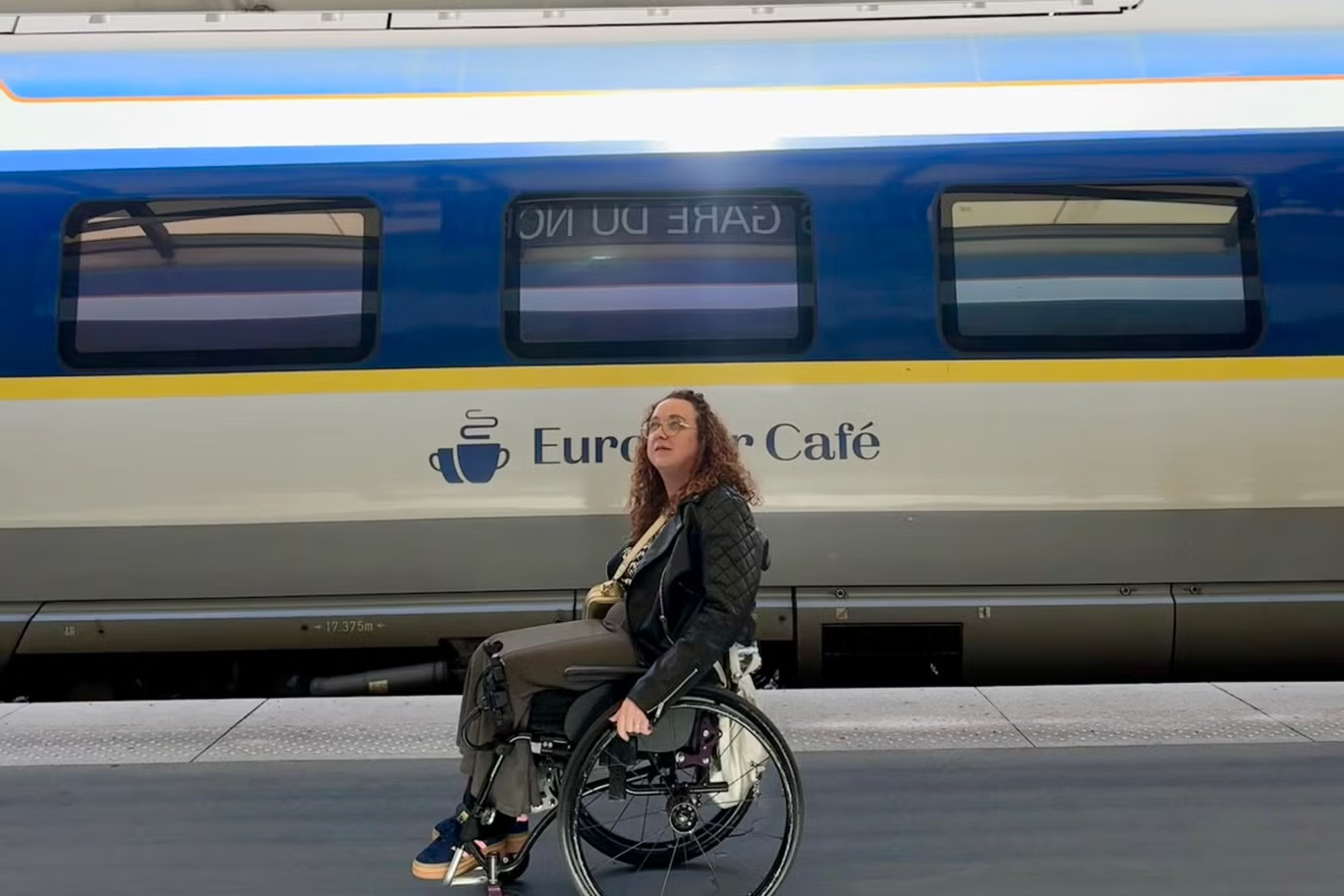
This was my fourth journey on Eurostar, having previously travelled to Amsterdam three times. At its best, Eurostar has felt like freedom: I can stay in my wheelchair for the entire journey, access the toilet independently, and travel without the constant worry of wheelchair damage that comes with flying. At its worst, when disruption hits, that sense of control can disappear quickly.
On one previous journey, a fault meant the train stopped for hours before terminating early in Brussels, where I was left without the support I needed to continue my journey safely. After being assisted off, I was forced to crawl onto a connecting train. It was chaotic, distressing, and avoidable.
So, travelling from London to Paris this time, I was keen to see whether the improvements Eurostar says it has made – from priority waiting areas to a more joined up approach to assistance – makes real difference in practice.
Booking and planning
Booking was simple. As a wheelchair user, ramp assistance is automatically arranged when selecting the wheelchair fare, and my companion was able to travel at a discounted rate. It felt straightforward and familiar, with no real change from previous trips.
I checked Eurostar’s accessibility information online beforehand, which clearly outlines what support is available and who it’s designed for. That clarity is important because for many disabled travellers, the decision to book comes down to one question: will this actually work for me?
Eurostar says demand is growing, with assistance requests on the London to Paris route up more than 15 per cent. That suggests more disabled people are choosing rail, and trusting it to deliver. It also raises the stakes.
As Kirsty Hollywood, Eurostar’s customer accessibility manager, puts it: “Accessibility isn’t a feature, it’s the journey. So we have to understand all parts of the journey and what our customers need when: whether that’s practical assistance or just reassurance from our staff.” The ambition is clear. The question is how consistently that plays out in practice.
At the station
At St Pancras International, I was directed to wait near the Premier desk, which I already knew from past experience was close to a step-free entrance.
Staff were there on time, and the process felt calm and organised. A dedicated check-in booth for wheelchair users meant no queuing, and the new assisted waiting area offered a quieter space away from the main concourse. It was noticeably less overwhelming than the general station environment.
It’s a simple addition, but an important one. In a busy station, knowing exactly where to wait and that staff will find you removes a layer of stress. For someone new to rail travel, or newly disabled, that reassurance is invaluable.
Because I’d booked a wheelchair user fare, my companion and I were also able to access the Premier lounge. After the noise of the main concourse, stepping into a calmer space for coffee and pastries felt like a reset before the journey.
Once we left the lounge, the reality of a busy international station returned. The crowds were overwhelming, but staff stepped in to guide me through, clearing space and ensuring I could access the lifts quickly.
Read the full article and watch Carrie's video
Categories
- All Categories
- 16.4K Start here and say hello!
- 7.8K Coffee lounge
- 123 Games den
- 1.8K People power
- 191 Announcements and information
- 25.9K Talk about life
- 6.2K Everyday life
- 444 Current affairs
- 2.6K Families and carers
- 889 Education and skills
- 2K Work
- 630 Money and bills
- 3.8K Housing and independent living
- 1.2K Transport and travel
- 674 Relationships
- 1.6K Mental health and wellbeing
- 2.6K Talk about your impairment
- 885 Rare, invisible, & undiagnosed conditions
- 949 Neurological impairments and pain
- 2.3K Cerebral Palsy Network
- 1.3K Autism and neurodiversity
- 41.8K Talk about your benefits
- 6.2K Employment & Support Allowance (ESA)
- 20.6K PIP, DLA, ADP & AA
- 9.5K Universal Credit (UC)
- 5.4K Benefits and income