Minister backs calls for better support for people with cerebral palsy

A government minister has backed calls to improve specialist support for people with cerebral palsy.
Alison Thewliss, Minister for Community Care, visited the Cerebral Palsy Scotland therapy centre in Glasgow to meet service users, families, and specialist staff, and to hear first-hand about the importance of lifelong, tailored care.
During her visit, Ms Thewliss spoke with adults receiving therapy, as well as members of the charity’s senior leadership team.
She also met with Danielle Farrell, an adult with cerebral palsy who serves on the National Care Service Advisory Board, before joining a round-table discussion on the challenges faced by people with the condition across Scotland.
Alison Thewliss MSP met people with cerebral palsy, their families and specialist therapists during a visit to Cerebral Palsy Scotland in Glasgow (Image: Cerebral Palsy Scotland)
Ms Thewliss said: "I was pleased to meet people affected by cerebral palsy and the specialist staff delivering therapies at Cerebral Palsy Scotland’s Centre.
"I want everyone living with cerebral palsy in Scotland to receive the best possible care, at the right time and in the right place.
"It's important that people living with cerebral palsy are able to decide what support they need and that each person’s pathway genuinely supports the individual in ways that are personalised, innovative, and tailored to their circumstances.
"I recognise and value the support that Cerebral Palsy Scotland provides to people of all ages.
"We will continue to work with NHS, third sector partners and people with cerebral palsy to improve services and drive up standards of care."
Discussions during the visit focused on the current lack of specialist adult services in Scotland and the impact of this gap as people age.
The charity raised concerns about reductions in social care packages, particularly for adults whose needs may be misunderstood due to limited awareness of cerebral palsy among some care providers and assessors.
Stephanie Fraser, chief executive of Cerebral Palsy Scotland, said: "We were delighted to welcome Minister for Community Care Alison Thewliss to Cerebral Palsy Scotland and give her the opportunity to hear directly from people with cerebral palsy and their families about the support they need to live healthy, fulfilling lives.
"Cerebral palsy is a lifelong condition, but specialist support is not always available throughout a person’s life.
"Adults can experience significant changes in their health, mobility and support needs as they get older, yet there are currently no specialist adult cerebral palsy services in Scotland."
There are more than 100 births in Scotland each year that result in a diagnosis of cerebral palsy.
Cerebral Palsy Scotland reports that three-quarters of those with the condition experience chronic pain and fatigue, and many face changing health needs as they grow older.
The charity argues that access to specialist, multidisciplinary therapy can help individuals manage their condition, maintain independence, and prevent avoidable deterioration.
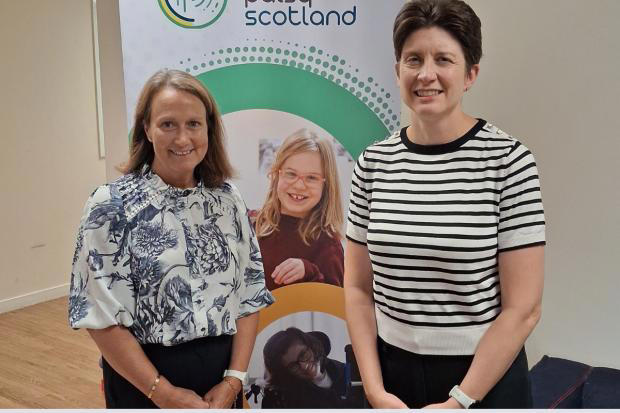
Alison Thewliss MSP met people with cerebral palsy, their families and specialist therapists during a visit to Cerebral Palsy Scotland in Glasgow (Image: Cerebral Palsy Scotland)
Ms Fraser said: "Our services demonstrate the difference that specialist, multidisciplinary therapy can make.
"Therapy can help people manage their condition, prevent avoidable deterioration and maintain their independence, but access to this support needs to be recognised as an essential part of lifelong care.
"We welcome the opportunity to work with the Scottish Government to improve outcomes for people with cerebral palsy and ensure they are visible within Scotland’s health and social care planning.
"There is a real opportunity to make a lasting difference through early intervention, specialist training and condition-specific support."
The charity has called for the Scottish Government to take specific actions, including enabling Self-Directed Support payments to be used for maintenance therapy, introducing routine cerebral palsy training for health, education and social care professionals, developing a national framework for children and adults with cerebral palsy, and improving national and local data collection.
Categories
- All Categories
- 16.4K Start here and say hello!
- 7.8K Coffee lounge
- 123 Games den
- 1.8K People power
- 191 Announcements and information
- 25.9K Talk about life
- 6.2K Everyday life
- 444 Current affairs
- 2.6K Families and carers
- 889 Education and skills
- 2K Work
- 630 Money and bills
- 3.8K Housing and independent living
- 1.2K Transport and travel
- 674 Relationships
- 1.6K Mental health and wellbeing
- 2.6K Talk about your impairment
- 885 Rare, invisible, & undiagnosed conditions
- 949 Neurological impairments and pain
- 2.3K Cerebral Palsy Network
- 1.3K Autism and neurodiversity
- 41.8K Talk about your benefits
- 6.2K Employment & Support Allowance (ESA)
- 20.6K PIP, DLA, ADP & AA
- 9.5K Universal Credit (UC)
- 5.4K Benefits and income