My name is Joel and I have lived with arthritis for most of my
life. This started with a juvenile form when I was 11 years old, then Ankylosing
Spondylitis in my teens. I was finally diagnosed with Psoriatic Arthritis in my
20s.
In 2019, I started a blog to share my experiences, raise
awareness and to be an advocate for those with arthritis and other autoimmune
conditions.
Pain gets its claws into everything
Living with any chronic condition is tough. It’s relentless,
tiring and can be all-consuming. Often your plans are dictated by the behaviour
of the disease rather than your desires. From the small things such as your
plans for the day, to heavily influencing your life story. For instance, your
career choices.

For me, alongside the uncertainty of arthritis, it is the pain
that has such a big impact. I have had years in remission with completely
pain-free days. However, like during my current flare, I am in moderate to
severe pain most days and nights for many months. It’s exhausting.
Pain affects your mood, sleep, relationships, ability to
perform your job, basic tasks around the home and even your ability care for
your children and loved ones. Each day I have a balance to strike between pain
management and function. It’s about trying to manage the pain, whilst retaining
a level of lucidness, depending on my responsibilities for that day. It’s a
constant mental struggle and I tend to be my biggest critic.
Impacting your mental health
Inevitably, living with a disability and high levels of pain
does take a toll on your mental health. If the constant pain doesn’t wear you
down, the lack of sleep, loss of confidence or worries over job security and
finances will. However, this is completely understandable and reasonable, I
just couldn’t see that over the years.
I spent far too long believing that my poor mental health was
a weakness, that I should have learnt to cope better or I somehow wasn't strong
enough. I was embarrassed that I still couldn't manage at times, despite having
my condition for years.

It took being a parent for six months to realise that I had
lived with numerous episodes of depression, anxiety and low confidence over the
last 25 years. Also, they all coincided with flares in my chronic condition.
I used to be able to play sport, the guitar and run.
However, during a flare up I suddenly had no hobbies or social life, with this
happening in a matter of weeks. I went from playing rugby to not being able to
walk unaided some days within a month. Not including the aforementioned factors
of chronic pain: being off work, lack of sleep and so much more.
The real strength is knowing when to ask for help
Becoming a father changed my perspective on life. I sought
help from my GP and local wellbeing service. I learnt that it wasn’t what I
couldn’t do that mattered, but what I could do in those periods of disability. The
simple things with my son. Time spent as a family. More importantly, it taught
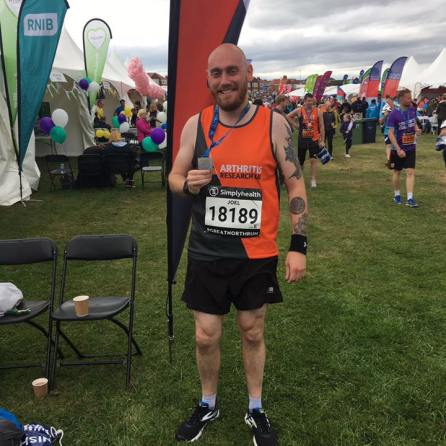
me two appreciate what I accomplished when I was in better health. I completed
RideLondon 100 and ran the Great North Run for charity. These are not the
actions of a weak person, but the mark of someone who pushes back the
boundaries of the hand they have been dealt with. I make the most of what I can
do, when I have the capabillity to do it.
I wasn’t weak, I was surpassing expectations and anyone
would have difficulty in adapting and living with the pain and periodic limitations.
Everyone has a limit, it’s recognising and knowing what to do when you approach
it that matters.
In my experience, chronic illness and mental health are
intrinsically linked, but with the right support, mindset and knowing when to
be kind on yourself can help. It’s ok not to be ok and knowing when to ask for
help is a sign of strength.
If you would like to read more of Joel’s story, visit his blog or follow him on social media
@joelvsarthritis.
What have you overcome with your disability? What are
your experiences with chronic illness and mental health and what are your tips
for managing living with a long term health condition?