Interview with Pat Herring: Five Decades of Advocacy and Community

Cerebral Palsy Awareness Month is also a time to recognise the supporters and advocates who stand alongside the CP community. I recently had the privilege of spending time with Pat Herring — an advocate, campaigner, parent of an adult living with CP, and long-standing member of the CP Network who has been involved with Scope for almost 50 years.
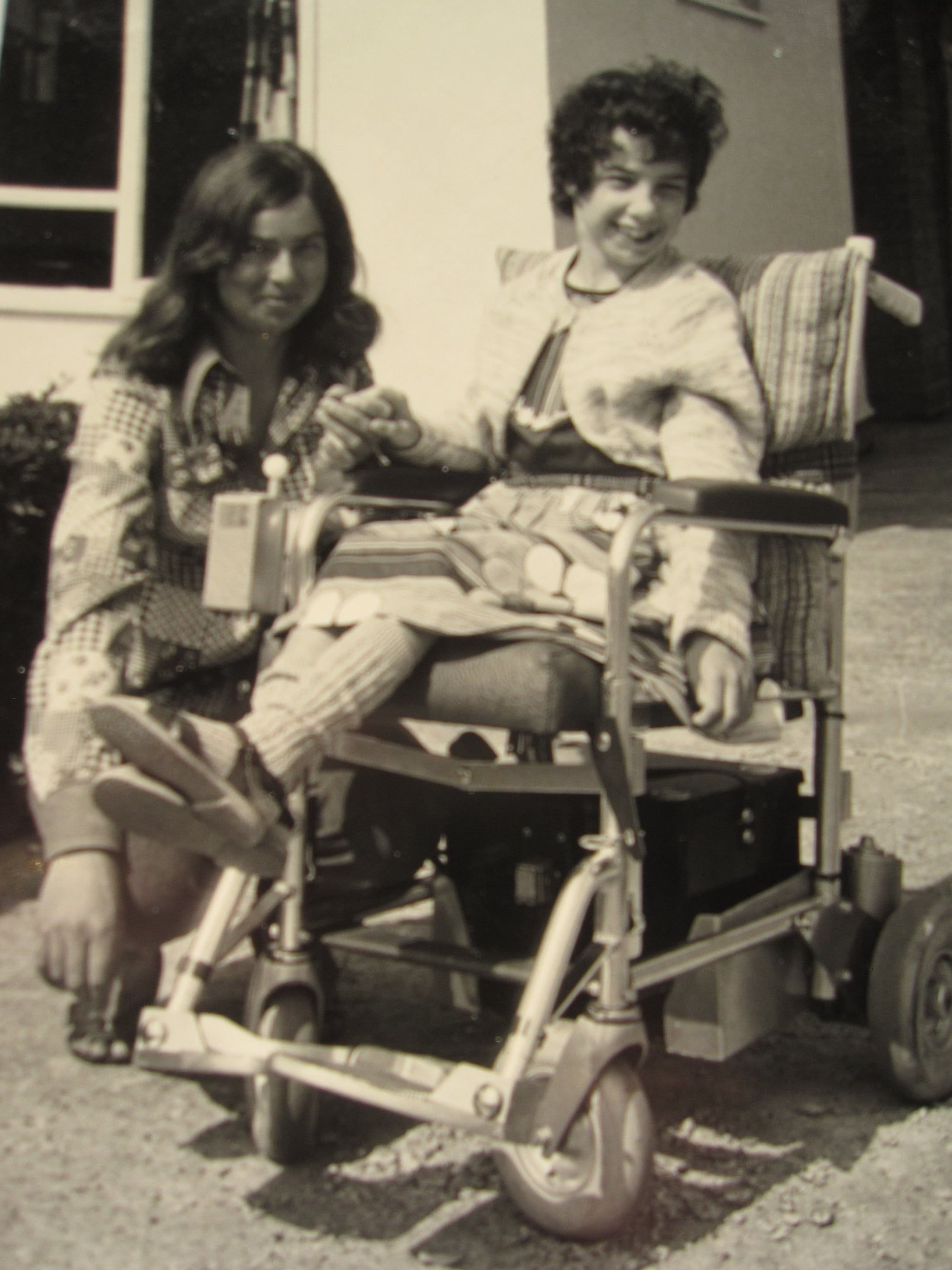
Could you give us a brief background of your involvement with the cerebral palsy community?
My involvement began when my daughter Sandra was three years old. Our paediatrician introduced us to what was then called the Spastics Society (now Scope). We were also connected with Cheyne Walk, which helped Sandra develop the skills she needed to live as independently as possible.
In 1976, I joined my local Scope group committee. I never imagined then that I would still be involved nearly 50 years later, but the work and the people meant so much to me.
Over the years, I served as Treasurer, Welfare Officer and Vice-Chair. Our local group was affiliated with national Scope and represented groups regionally, which meant we were able to share experiences and support each other across the country.
The training I received from Scope was incredibly valuable. In particular, the Trustee training helped me develop the skills needed to help people organise and govern community groups effectively.
Supporting people’s welfare has always been something I care deeply about. Looking back, I realise I’ve only missed a handful of meetings in fifty years — which probably says a lot about how important the community has been to me.
This year, I’m finally retiring from the role, but it has been an incredible journey.
Can you tell us more about Sandra and her living situation?
Sandra attended a mainstream nursery when she was young, before later moving to a special school that better supported her needs.
As a young adult, she attended Portland College, a specialist residential college. Her time there was transformative. She learned essential life skills and was introduced to a Touch Talker communication device, which opened up her world and allowed her to communicate far more independently.
After Sandra finished college, I fought hard to ensure she could maintain that independence. That led to her moving to Ashley Court, which at the time was the only supported living accommodation for physically disabled adults in Lincolnshire.
Ashley Court has faced threats of closure more than once, and each time it has been extremely worrying for residents and their families.
How did you mobilise as a group to save the accommodation?
During the most recent threat of closure, residents and families were given just two days’ notice of a meeting. At that meeting, we were told that everyone would have two months to leave.
There were tears, shock, and a great deal of anger.
Families and residents quickly mobilised. We contacted MPs, councillors, local newspapers, and national media. We wrote letters, made phone calls, and sent countless emails.
After months of campaigning, Sandra and I finally received a letter confirming that the home would remain open. However, a new company would take over the care provision needed by residents.
It was an enormous relief for everyone involved.
What would be your top tips for other parents and disabled people facing similar challenges?
Make it personal. These are not just service users — they are people’s sons, daughters, and family members. Make sure they are recognised as a family unit.
Let residents speak for themselves. Many disabled people have strong voices and should be at the centre of these conversations.
Be polite but firm. Persistence matters. Be prepared to listen as well as campaign. Keep going even when it feels exhausting.
Remind decision-makers that they are dealing with human lives.
Highlight the practical consequences. If specialist accommodation closes, local authorities will face major challenges. There may be a lack of appropriate care, residents could be separated from their communities, and elderly care homes are often not suitable environments for physically disabled adults who have capacity and want to live independently.
As Pat retires and steps back, her contribution to the cerebral palsy community cannot be overstated. Through decades of commitment, she has helped strengthen community networks, defend vital services, and ensure that disabled people’s voices are heard.
Most importantly, she has shown what sustained, compassionate advocacy can achieve.
Fifty years on from that first introduction to Scope, Pat’s legacy is clear: a stronger community, greater independence for disabled people, and a powerful example of what determination and care can accomplish. And while Pat may be stepping back from her formal role, the impact of her work will continue to be felt for many years to come
Categories
- All Categories
- 16.4K Start here and say hello!
- 7.8K Coffee lounge
- 123 Games den
- 1.8K People power
- 191 Announcements and information
- 25.9K Talk about life
- 6.2K Everyday life
- 444 Current affairs
- 2.6K Families and carers
- 889 Education and skills
- 2K Work
- 630 Money and bills
- 3.8K Housing and independent living
- 1.2K Transport and travel
- 674 Relationships
- 1.6K Mental health and wellbeing
- 2.6K Talk about your impairment
- 885 Rare, invisible, & undiagnosed conditions
- 949 Neurological impairments and pain
- 2.3K Cerebral Palsy Network
- 1.3K Autism and neurodiversity
- 41.8K Talk about your benefits
- 6.2K Employment & Support Allowance (ESA)
- 20.6K PIP, DLA, ADP & AA
- 9.5K Universal Credit (UC)
- 5.4K Benefits and income